

2025 YEAR-END

Auto liability

Report Objectives

This report aims to summarize the present metrics for our auto liability (AU) programs, assess the landscape of auto claims and litigation, and benchmark our patterns against comparable industry research. 

data parameters

Our practice team uses JURIS claims data to perform comparative analyses informed by their expertise and analytics. The data in this report is based on both insured and self-insured claims for all states across five, 12-month periods (referred to as CY) from Jan. 1, 2021, through Dec. 31, 2025.

Key observations

Auto liability claim activity continued to expand, extending a multi‑year growth trend. Claims remained geographically concentrated, with a small number of states accounting for a disproportionate share of new activity. Litigation trends were mixed. Litigation on newly reported claims eased modestly, though litigated bodily injury claims remained significantly more expensive than non‑litigated claims. Overall, results reflected improving operational efficiency alongside rising severity, increased litigation complexity and greater exposure to high-cost claims, reinforcing the need for continued focus on early intervention, litigation management and severity control.

4.0%

rise in auto liability claim volume in CY 2025, marking a fourth consecutive year of growth, though the pace slowed from prior years.

12%

increase in new bodily injury claims, accounting for 16.4% of all new auto liability claims.

Texas, New York 
and New Jersey​

claim volume remained geographically concentrated, with the top five states representing 43.5% of new claims, led by Texas, New York and New Jersey.

46 DAYS

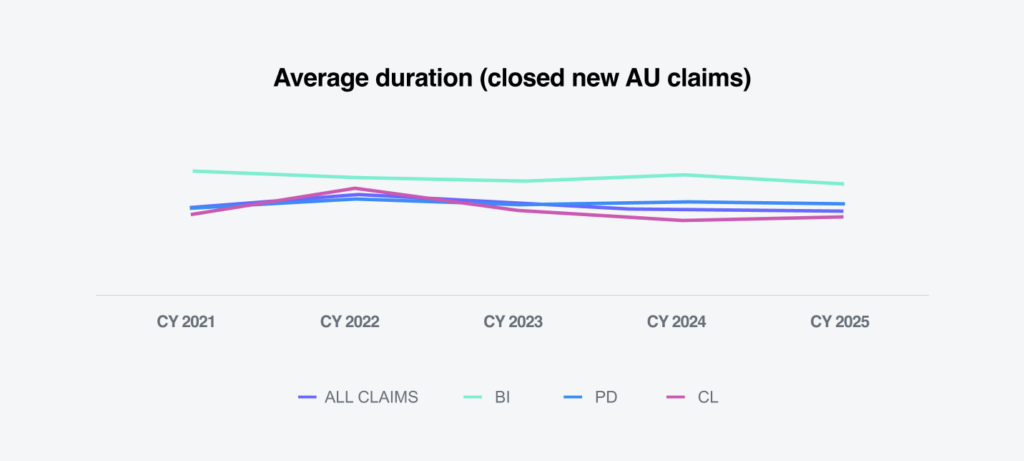
average duration for new claims in CY 2025, a reduction driven by a four-day decline in BI claim duration.

10.7%​

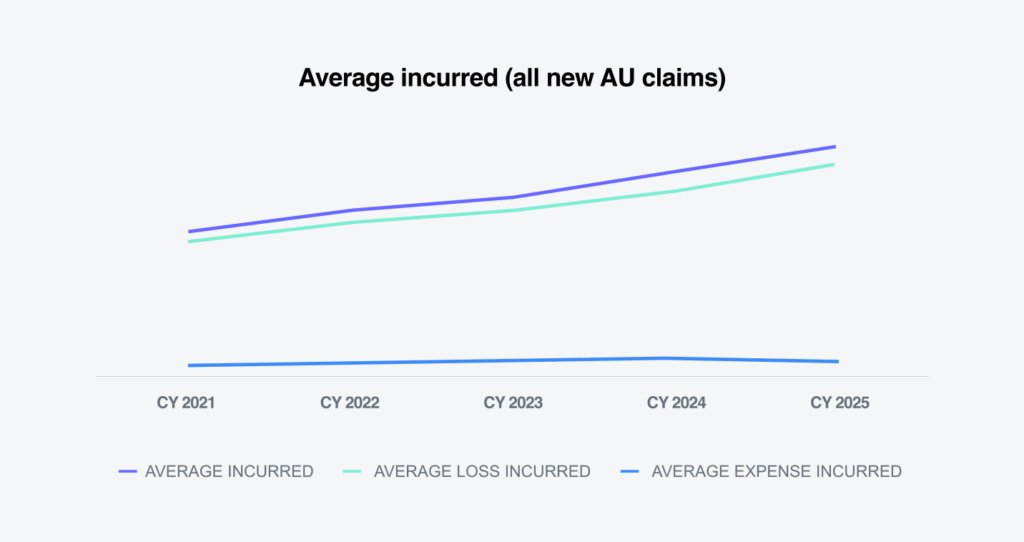
increase in average incurred costs in CY 2025.

This largely reflects higher loss severity, while average expense incurred declined for the first time since CY 2021.

26.1%​

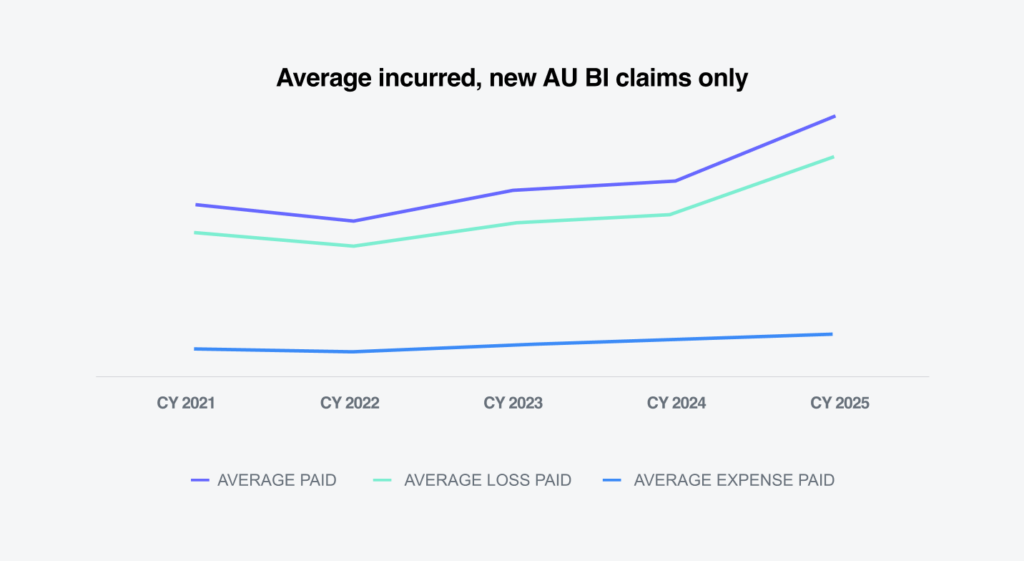
rise in average incurred bodily Injury claim costs.

Severity continued to outpace inflation, averaging 14.5% annual growth over the past four years.

>50%

$25K+

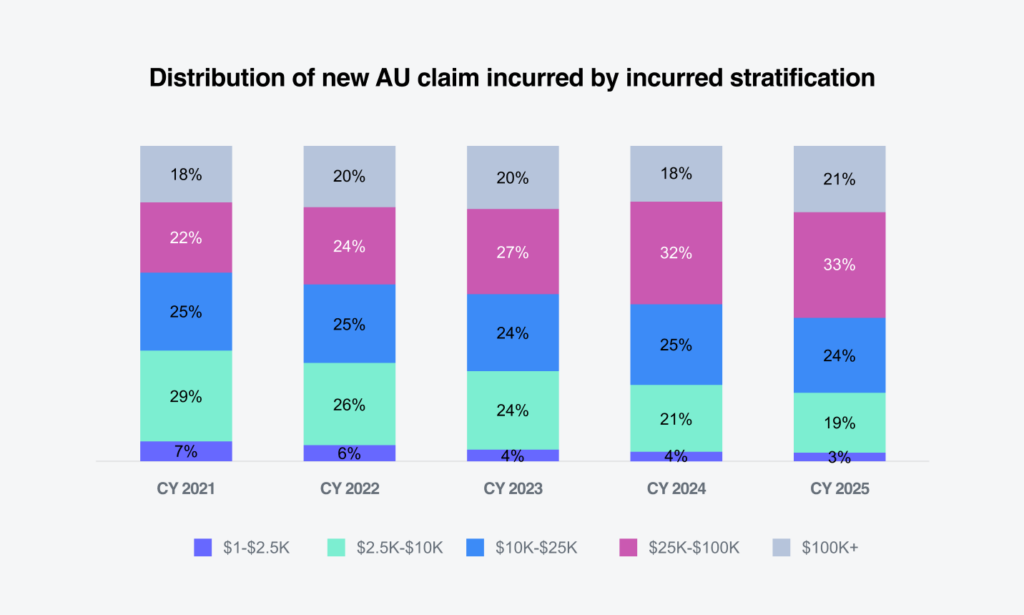
high-severity claims are exerting disproportionate financial pressure, as claims exceeding $25,000 accounted for more than half of total incurred despite representing a small share of total volume.

Litigation rates

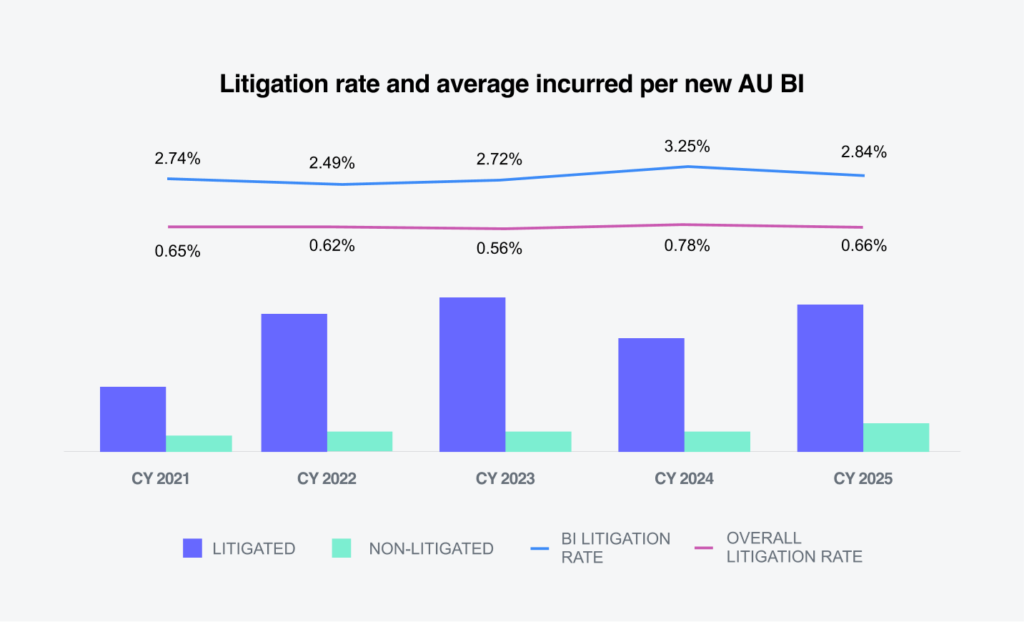
  • Litigation rates on new claims declined modestly in CY 2025; however, litigated bodily injury claims continued to cost more than five times non-litigated claims on average.

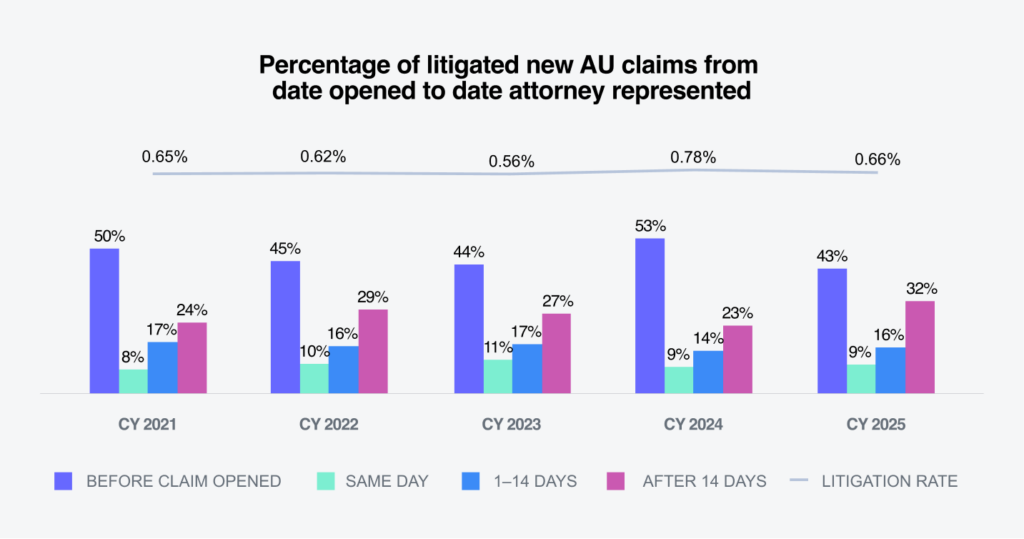
  • Early attorney involvement remained a key cost driver, with more than half of litigated claims retaining counsel within 24 hours of first notice.

Pending auto claims

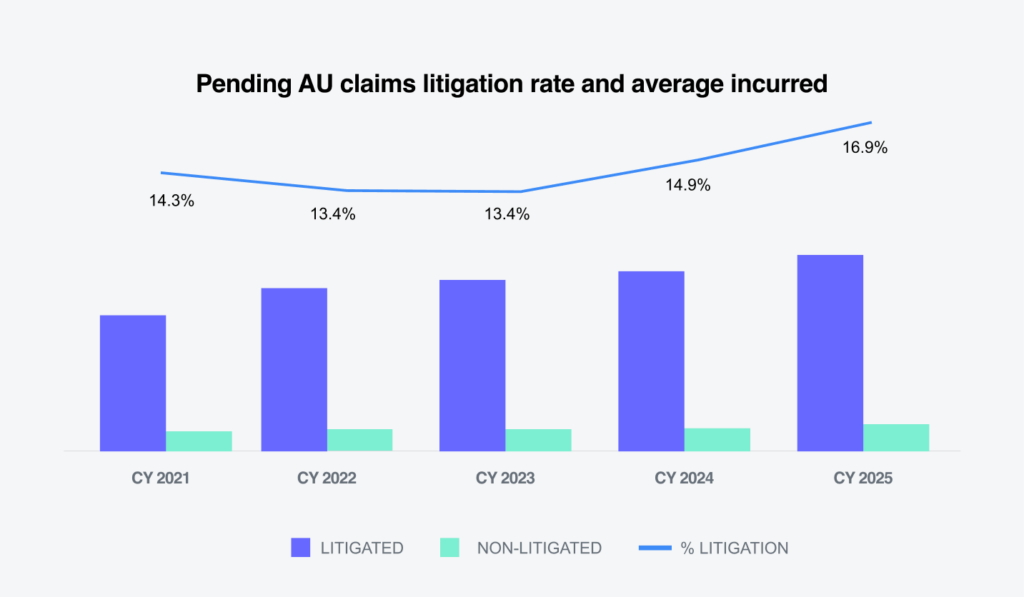
Pending auto claims saw a sharp increase in litigation, with the rate increasing to 16.9%, the largest year-over-year increase in five years, alongside a 10.4% rise in average incurred.

Closed litigated claims

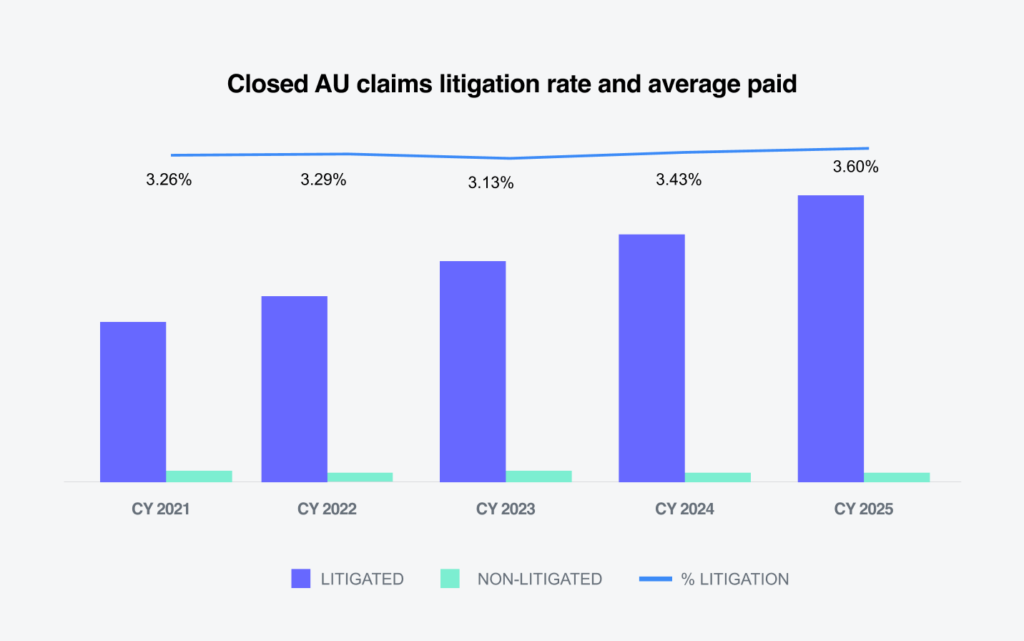
Closed litigated claims represented just 3.6% of closures but accounted for more than half of total closed paid dollars, underscoring severity concentration risk.

Operational performance

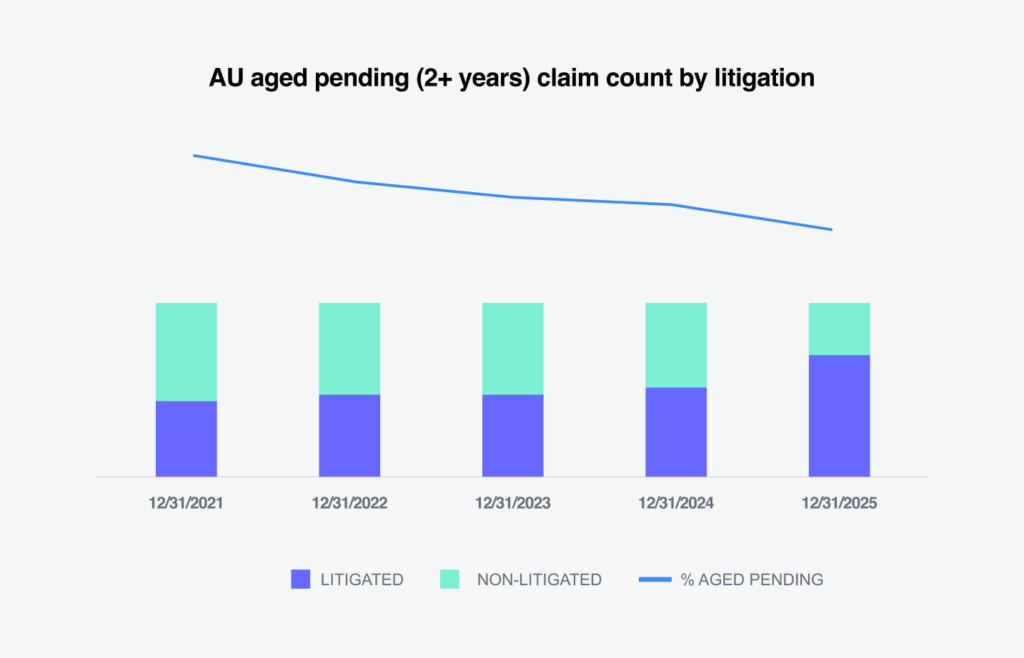
Operational performance improved as pending claims aged two years or more declined for the fifth straight year, though litigated claims now make up 71% of the remaining aged inventory.

Download a summary slide with these key observations.

REPORT CONTENTS

Market

U.S. casualty rates

9%

in Q4 2025

Marsh

U.S. casualty rates rose 9% in the fourth quarter of 2025, up from 8% in the prior quarter. Marsh cited continued auto liability pressure from large jury verdicts, rising auto physical damage repair costs and increasing attachment points.

AM Best

Commercial auto loss severity remains elevated despite rate increases. AM Best said insurers have struggled to offset rising severity driven by inflation, higher technology‑related replacement costs and increased repair labor expenses, with adverse loss development continuing to pressure results.

Swiss Re

A 2025 behavioral study found juror sentiment has shifted toward plaintiffs and that, in severe injury cases, jurors may recommend high compensation against small and midsize businesses nearly as often as against large corporations, increasing risk for fleet and SMB insureds.

NCCI

Medical Inflation Insights, published in October 2025, said medical price growth moderated during 2025, largely due to slower hospital services inflation. NCCI said the slowdown is likely temporary, with hospital services inflation expected to return to about 4% to 5%, pushing overall medical price growth closer to about 3%, up from about 2.5% at the time.

Volume

Claim volume increased​

+4.0%​

in CY 2025​

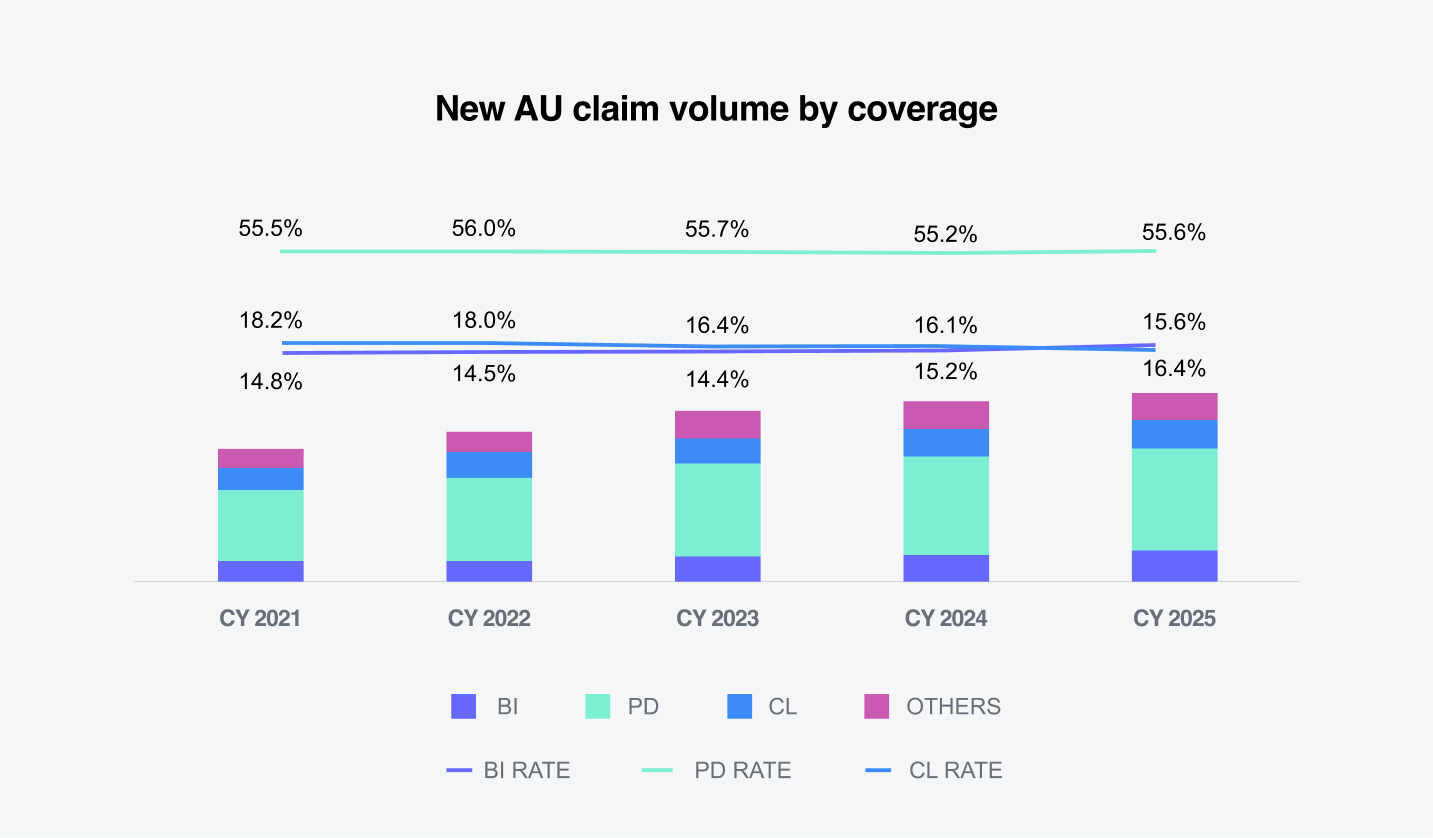
New claim volume increased 4.0% in CY 2025, following increases of 12.8% in 2022, 14.2% in 2023 and 6.1% in 2024. The increase was driven by bodily injury claims, which rose 12.0% and now account for 16.4% of all new AU claim volume.

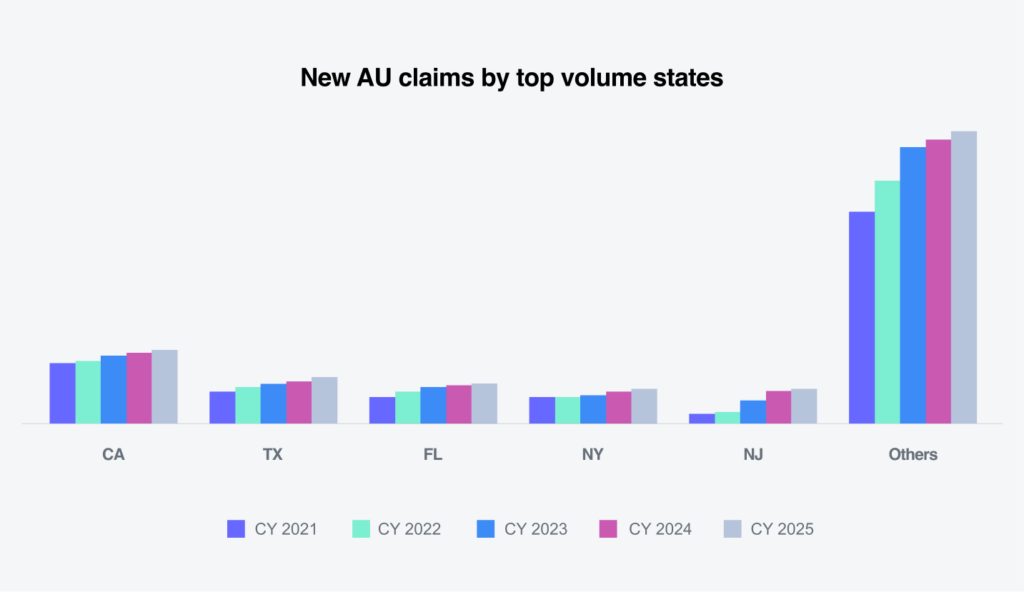
The five states with the highest claim volume accounted for 43.5% of all new claims. Texas posted the largest increase, up 7.2%, followed by New York at 7.1%, New Jersey at 7.0%, California at +3.7% and Florida at +3.1%.

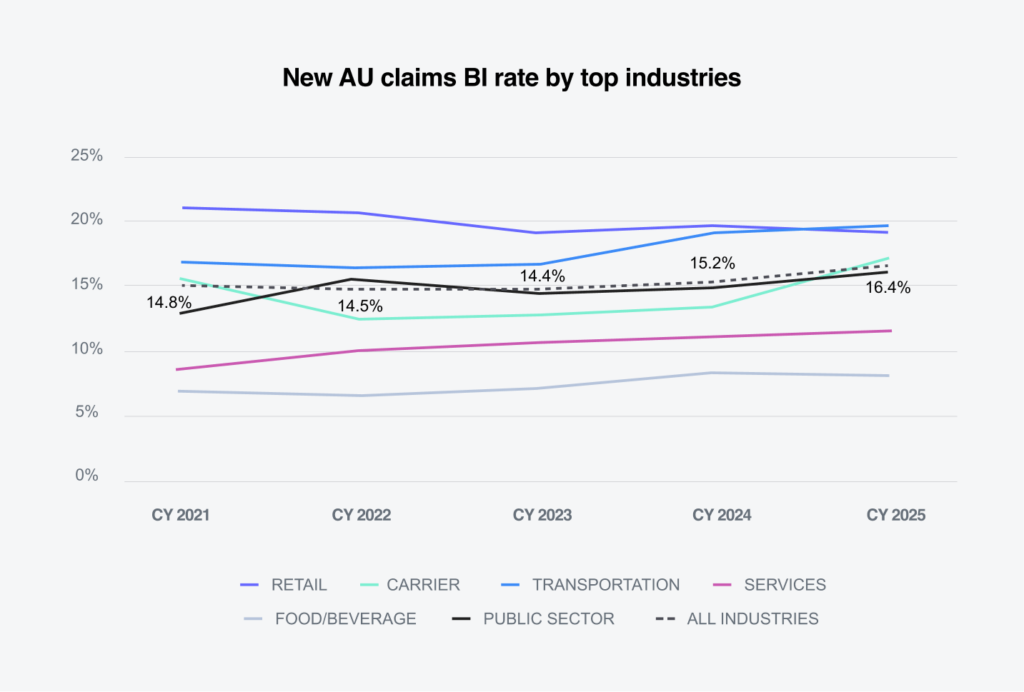
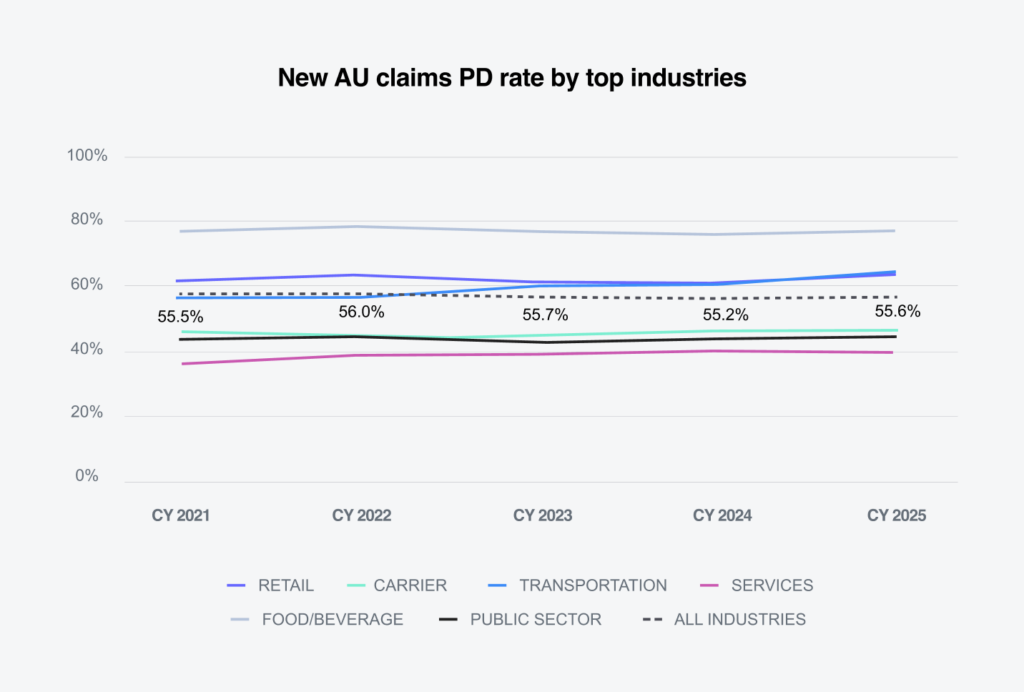
The rate of new bodily injury claims rose to 16.4% for CY 2025, up from 15.2% in 2024. Transportation claims recorded the highest new bodily injury claim rate at 19.4%, while carrier claims posted the largest percentage increase, rising to 16.9%.  The retail sector’s new AU bodily claim injury rate declined to 19.0%.

The overall property damage rate rose to 55.6% in CY 2025, up from 55.2% in 2024. Transportation property damage claims posted the largest increase at 2.6%, followed by retail claims, which grew 2.2%.

Claim durations continued to decline across all closed claims, with the decrease driven by bodily injury claim durations.

Costs

+10.7%

IN CY 
2025

The average incurred for all new claims increased 10.7% in CY 2025. The rise was driven by higher average loss incurred, which increased 12.9% from the prior year.  Average expense incurred declined 12.7%, marking the first decrease since CY 2021.  Since 2021, average loss incurred has increased at an average annual rate of 10.4%. 

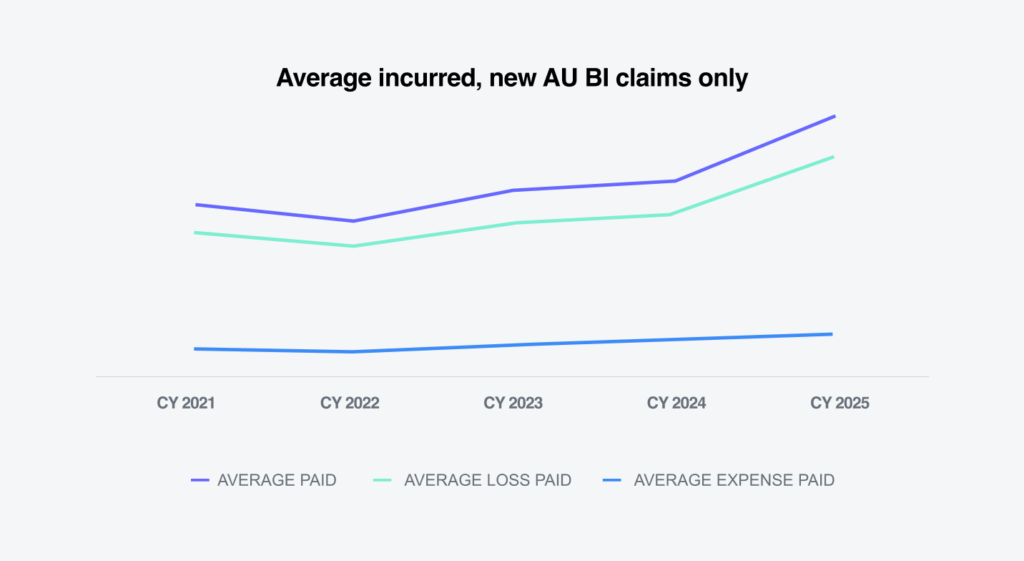
The increase in average loss incurred was driven by higher bodily injury claim severity, with average bodily injury loss incurred rising 26.1% in CY 2025. Average expense incurred for bodily injury claims increased 6.0% during the year.  Over the past four years, the average incurred per bodily injury claim has increased at an average annual rate of 14.5%, exceeding the rate of inflation over the same period.

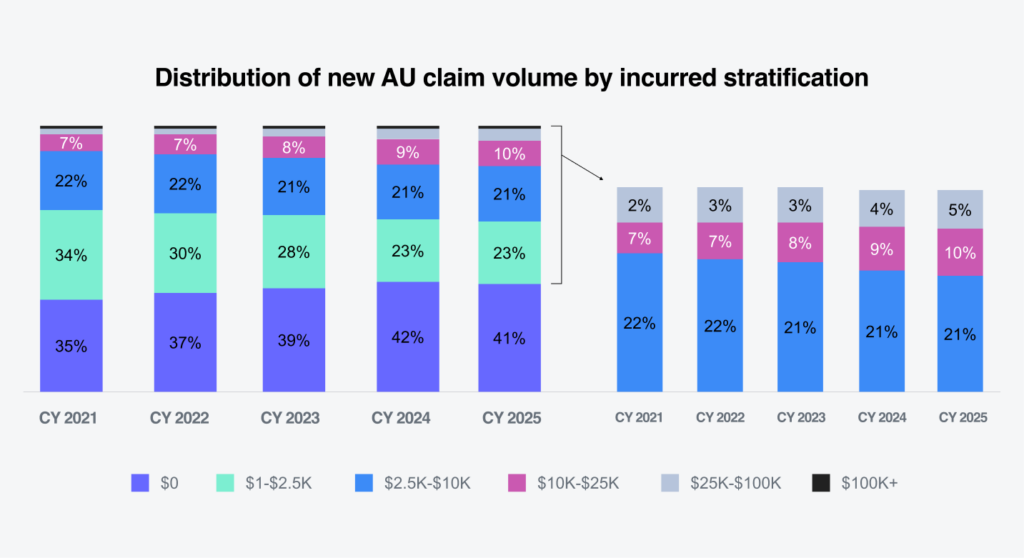
Higher‑tier incurred groups continued to see increased claim volume, driving growth in overall incurred value. Claims exceeding $100,000 rose to 0.5% of total volume in CY 2025, up from 0.3% in 2024. Despite representing a small share of claims, this group accounted for 20.9% of total incurred in 2025, an increase of 2.9 percentage points from the prior year.

Growth was also notable in the $25,000 to $100,000 segment, where claim volume increased 1% and accounted for 33.2% of total incurred. This segment has grown at an average annual rate of 2.9% since CY 2021.

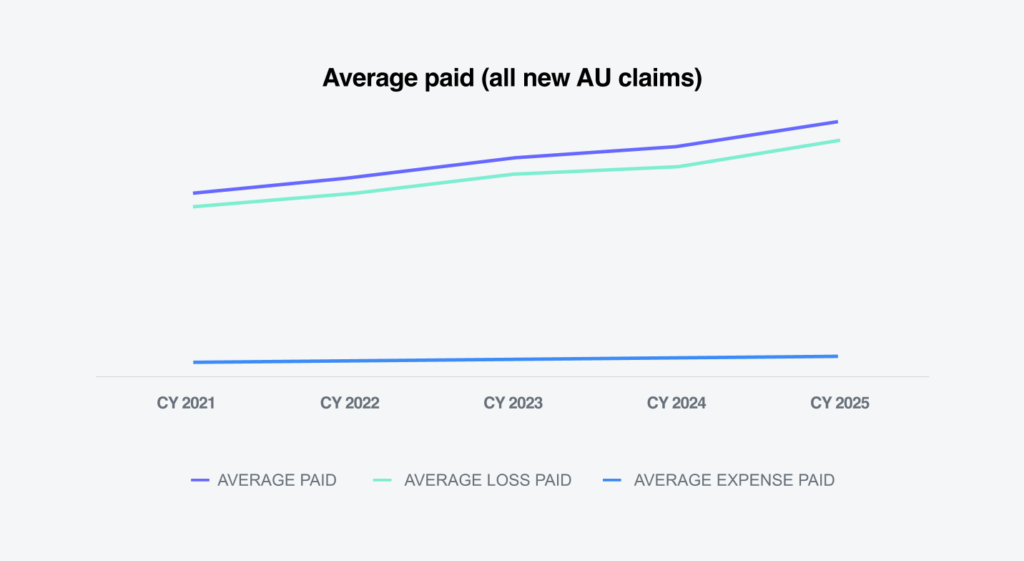
For all new claims, the average paid increased 8.9% in CY 2025. The increase was driven by bodily injury claims, which are up 32.3% from 2024. Since 2021, the average paid for new claims has increased at an annual average percentage rate of 6.8%, while bodily injury claims have risen at an average annual rate of 12.4%.  

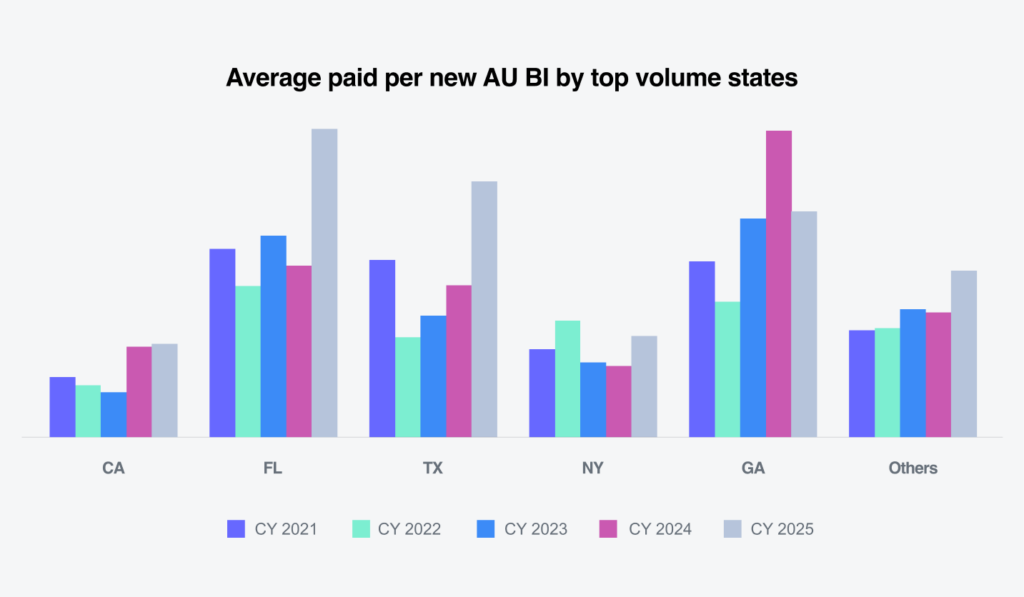
The three states with the highest average paid per new bodily injury claim were Florida, Texas and Georgia. Georgia’s average paid per new AU bodily injury claim declined 26.4% from CY 2024.

Florida’s average paid per new bodily injury claim increased 80% from 2024, driven by a threefold rise in litigated bodily injury claims. While notable, the increase reflected a relatively small number of unique, high‑severity losses. In each of the three states, claims exceeding $500,000 were the primary drivers of the increase.

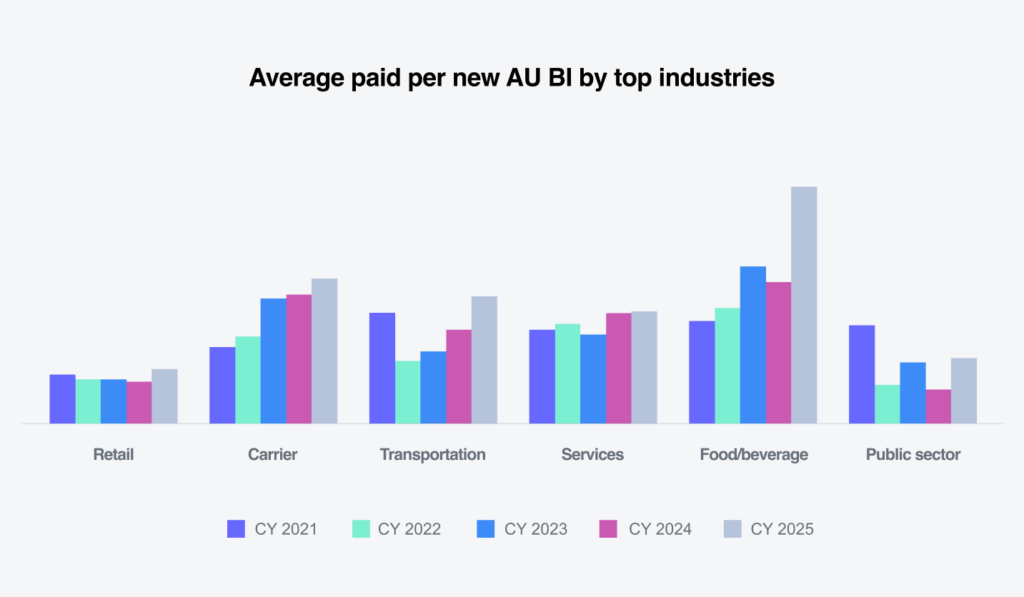
The average paid per new bodily injury claim increased 32.3% across all industries in CY 2025. In the transportation sector, the average paid rose 37.0% from 2024. The food and beverage sector recorded a 67.7% increase in average paid per new bodily injury claim, driven by shifts in claim volume rather than changes in claim severity.

Attorney representation and litigation

52%

Claims with representation within 24 hours

Early attorney representation continued to be a key driver of litigation. Among claims that became litigated, 52% had attorney representation in place within 24 hours of first notice, and 68% had representation within 14 days. While these figures improved from CY 2024, early representation remains a significant contributor to overall litigation rates.

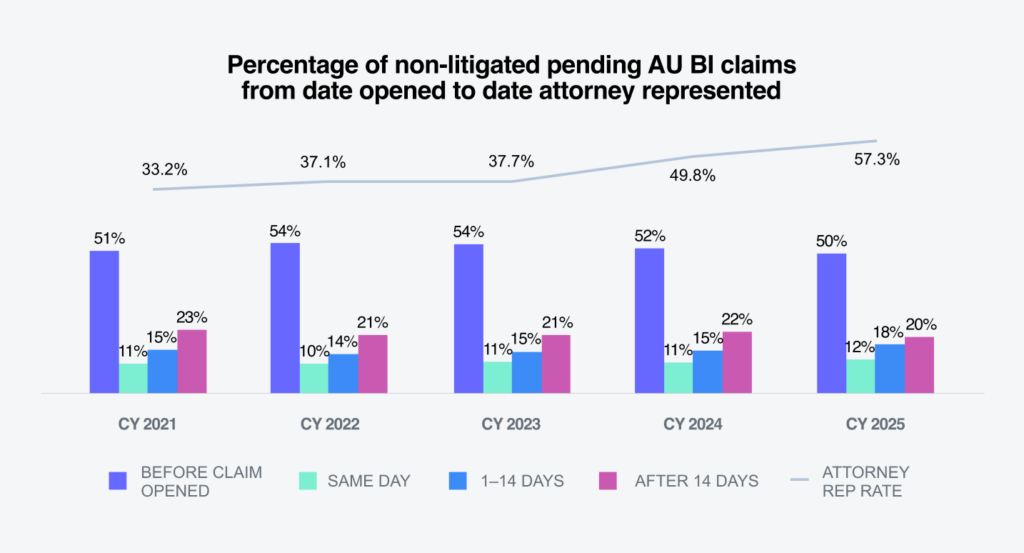
The share of non-litigated pending bodily injury claims with attorney representation increased 7.5%, rising to 57.3% in CY 2025 from 49.8% in 2024. This marked the fifth consecutive year of rising attorney representation rates since 2021. Notably, 80% of pending AU bodily injury claims had attorney representation in place within 14 days of first notice of report.

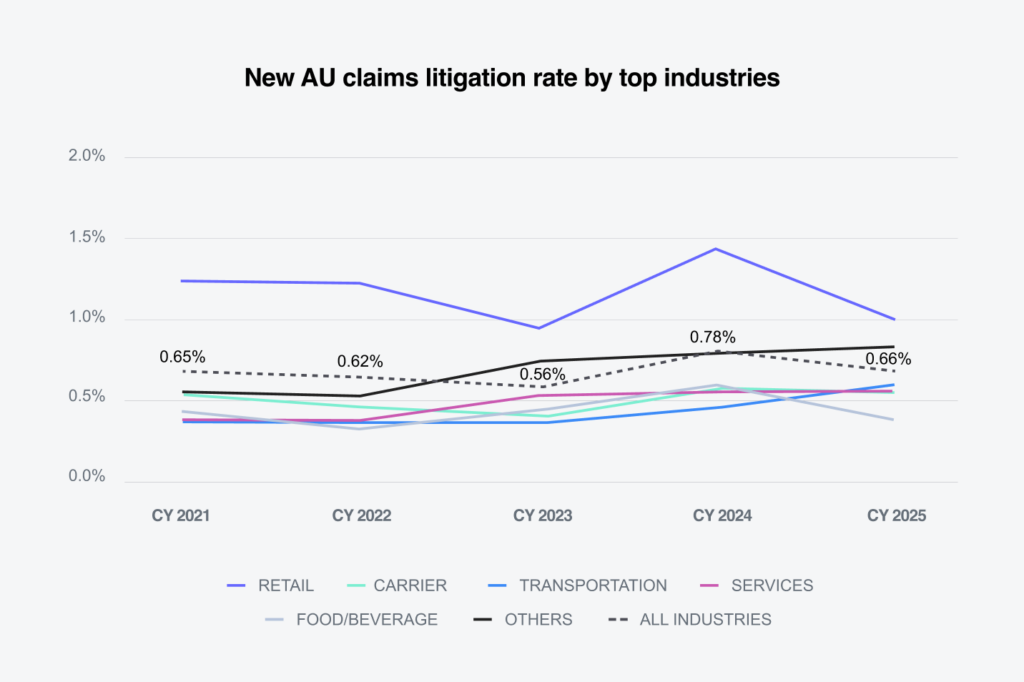
For new claims, the average litigation rate across all industries was 0.66% in CY 2025, down from 0.78% in 2024. The retail sector continued to post the highest litigation rate at 0.99%, though this marked a decline from 1.42% the prior year.

The litigation rate for new bodily injury claims declined 0.41% to 2.84% in CY 2025. Average incurred on new litigated bodily injury claims increased 31.7%, while average incurred on non-litigated new bodily injury claims rose 25.2%. On average, litigated bodily injury claims incurred costs 5.5 times higher than non-litigated claims.

For pending auto claims, the litigation rate increased to 16.9% in CY 2025, marking the largest year-over-year increase in five years. Average incurred for pending auto claims rose 10.4%.

The average paid on closed litigated claims increased 16.3%. On average, closed litigated claims paid 29 times more than nonlitigated claims. Although litigated claims represented only 3.6% of all closed claims, they accounted for 52.1% of total closed paid amounts.

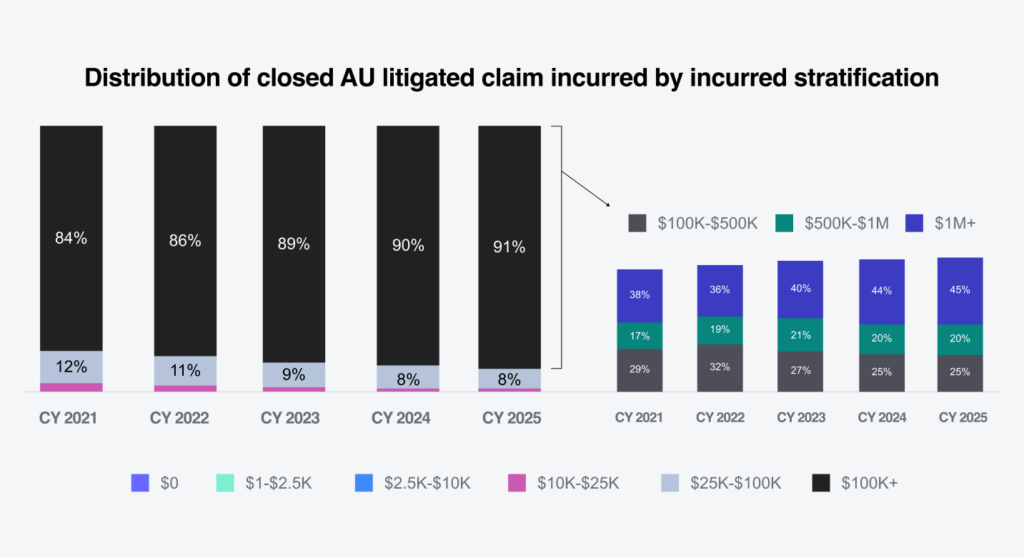
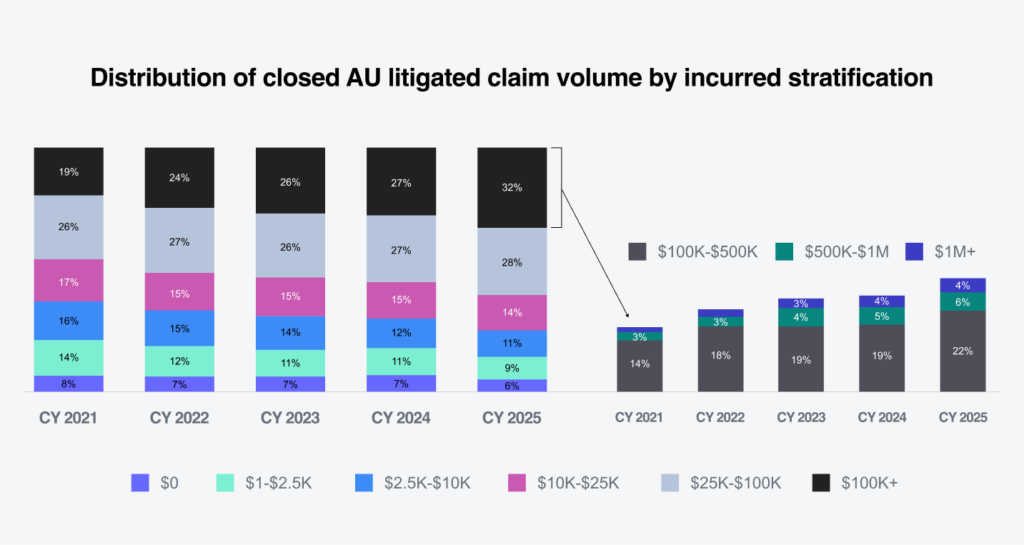
The increase in average paid on closed litigated claims was driven by higher‑severity claims exceeding $100,000. Claims in the $100,000‑plus tier accounted for 91% of incurred on closed litigated claims while representing 32% of closed litigated claim volume. Claims exceeding $1 million accounted for 45% of incurred on closed litigated claims despite representing just 4.0% of closed volume.

Closing

+1%

Closures for 
all new claims

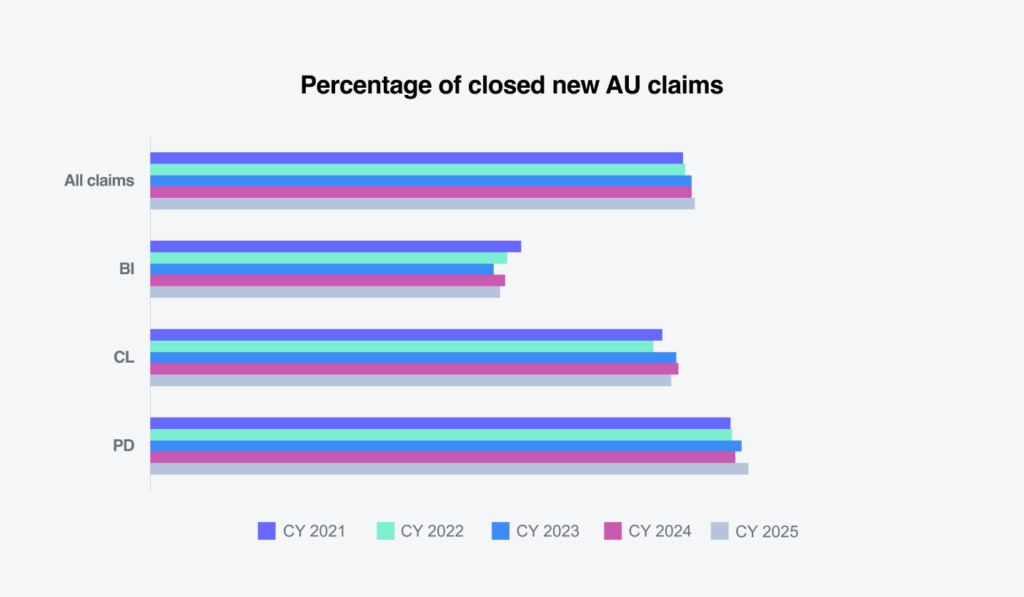
Closures for all new claims increased by 1%. The increase was driven by a higher share of physical damage claims.

Aged pending claims of two years or more declined to 11.4% of total pending claims in CY 2025, marking the fifth consecutive year of reduction in aged pending inventory. The decline was driven by nonlitigated aged pending claims, which fell 19% from 2024. Litigated claims now account for 71.0% of aged pending claims.

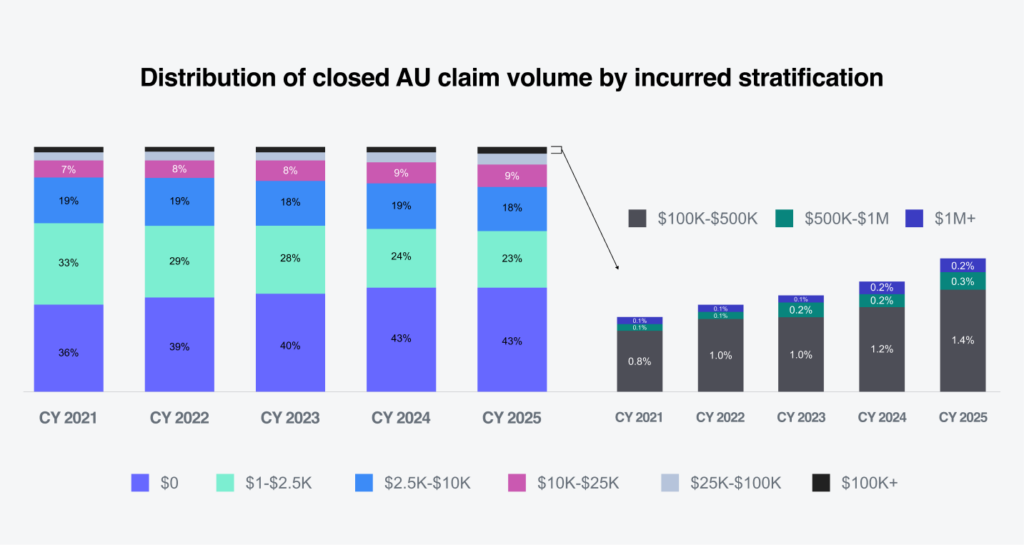
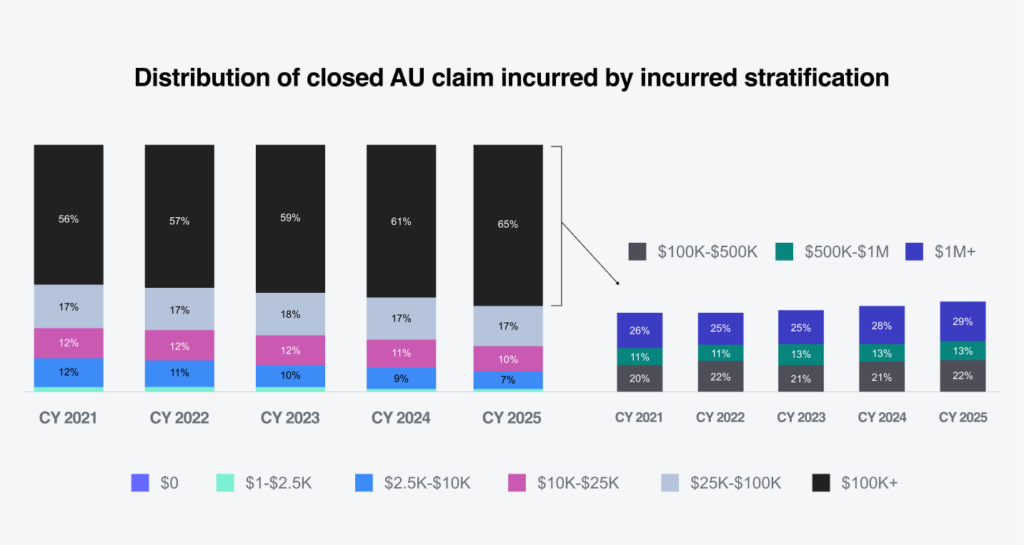
Closed claim stratifications by volume and incurred show that claims exceeding $100,000 represented 1.9% of closed claim volume but accounted for 65% of total closed incurred. This segment has increased at an average annual rate of 2.13% since CY 2021.

Future considerations

Attorney 
representation

Consistent with the overall industry, our auto claims data reflects:

01

Attorney representation continues to increase, with early engagement now a primary driver of claim severity. More than half of litigated claims had attorney representation in place within 24 hours of first notice.

02

Legal system abuse is concentrated in high-severity claims, with a small share of litigated cases above $100,000 driving a disproportionate share of incurred and paid dollars, amplifying Nuclear Verdict® exposure.

03

Jurisdictional and venue dynamics continue to shift, particularly in states experiencing outsized increases in litigated bodily injury severity.

04

Claims severity trends underscore the need for tighter collaboration across claims, legal and analytics teams, particularly identifying patterns of early attorney involvement, repeat plaintiff firms and escalation pathways.

Evolving industry concerns

Liability claims are increasingly influenced by factors beyond claim handling alone. Litigation strategies, jury psychology, venue selection and early attorney engagement are converging to drive higher severity, longer claim life cycles and greater volatility. Addressing these challenges requires a deeper understanding of how and when claims escalate, and where intervention can still meaningfully influence outcomes.

01

Nuclear verdicts® remain a central concern: driven by social inflation factors including jury skepticism toward corporations, broader expectations of corporate responsibility, third‑party litigation funding and emotionally driven courtroom narratives. These verdicts influence not only trial outcomes but also future settlement expectations.

02

Litigation rate vs. litigation severity disconnect: While litigation rates have stabilized or declined in some segments, the cost of litigated liability claims continues to rise at a disproportionate pace. This reflects a shift toward fewer but significantly more expensive lawsuits, often characterized by higher demands, extended timelines and aggressive plaintiff strategies.

03

Venue shopping and jurisdictional risk concentration: Plaintiff attorneys are increasingly strategic in selecting venues known for plaintiff-friendly judges, juries and procedural rules. Certain jurisdictions consistently produce higher verdicts, longer litigation durations and increased defense costs.

As outlined above, litigation and the environment in which it operates represent the single greatest influence on liability outcomes. The primary objective is to prevent litigation through early, thorough investigations, strong advocacy, empathy, clear communication, and timely resolution. When litigation occurs, the focus shifts to oversight, cost control and accountability, supported by structured workflows designed to improve outcomes for both litigated and non-litigated claims.

Early claim identification is a critical component of this approach. Technologies such as artificial intelligence, predictive modeling and data mining are used to assess potential exposure and litigation propensity at the individual claim level. The depth and quality of available data are essential to minimize false positives and identify the small percentage of claims that drive a disproportionate share of overall cost. For these claims, traditional cost‑focused workflows must be replaced with outcome‑focused strategies that emphasize enhanced investigation, increased supervisory involvement, expert roundtables and targeted use of external resources.

High‑exposure claims should not be managed in isolation. Greater cross‑functional collaboration with experienced industry professionals brings strategic judgment, pattern recognition and institutional perspective across industries, jurisdictions and plaintiff tactics, elevating claim management from tactical execution to strategic decision‑making. In complex claims, outcomes are driven less by activity than by strategy.

Organizations that intentionally align this depth of claims expertise with defense counsel demonstrated to be effective in high‑exposure litigation can establish a meaningful competitive advantage in managing severe claims. Together, these tools, processes and partnerships promote consistency, improve decision‑making and ultimately reduce claim severity and total cost of risk.

Conclusion

The data in this report underscores a liability environment increasingly defined not by claim frequency alone, but by rising severity, legal complexity and volatility.

While overall claim volume continues to rise at a modest pace, loss costs are growing far more rapidly, with average paid and incurred amounts significantly outpacing inflation. This divergence reflects a market in which a relatively small share of high-severity claims is driving a disproportionate share of loss dollars, reinforcing the reality that severity, rather than frequency, has become the primary risk management challenge in liability programs.

Social inflation and the expanding influence of nuclear verdicts® remain central contributors to this trend. The concentration of incurred and paid losses in claims exceeding $25,000, and particularly those above $100,000, illustrates how legal system dynamics, jury sentiment and venue behavior can magnify exposure well beyond traditional loss drivers. These outcomes are no longer isolated events; they are increasingly systemic, affecting multiple industries and jurisdictions and adding uncertainty in reserving, pricing and long-term cost projections.

Attorney representation patterns further compound these pressures. The data shows legal involvement occurring earlier and more frequently, with a majority of litigated claims now represented within 24 hours of first notice and rising representation rates even among non-litigated bodily injury claims. Early attorney engagement often limits opportunities for swift investigation, early resolution and controlled claim direction, increasing the likelihood that claims escalate into prolonged and costly disputes. As a result, attorney involvement has emerged as one of the most reliable early indicators of claim severity.

For companies and risk managers, these trends require a strategic shift. Traditional claims management approaches focused primarily on closure speed and expense control are no longer sufficient. Instead, organizations must emphasize early severity identification, rapid escalation protocols for attorney-involved claims and venue-aware defense strategies. Greater investment in analytics, predictive modeling and closer collaboration among claims, legal and risk teams is critical to identifying high-risk claims sooner and intervening before positions harden and costs escalate.

Ultimately, managing liability risk in today’s environment requires recognizing that external forces such as social inflation, litigation funding and evolving jury dynamics are reshaping loss outcomes. Organizations that adapt by prioritizing early engagement, disciplined decision-making and proactive litigation management will be better positioned to reduce volatility, protect balance sheets and navigate an increasingly complex liability landscape.

PAST REPORTS

2025 YEAR-END

© 2026 Sedgwick