
2026 MID-YEAR

Accommodations

Report Objectives

This report aims to summarize the present metrics for our accommodations programs, assess the landscape of accommodations and claim administration under the Americans with Disabilities Act (ADA), and benchmark our patterns against comparable industry research.

data parameters

Our practice team uses JURIS claims data to perform comparative analyses informed by their expertise and analytics. The data in this report is based on the first half of the calendar year, January through June, for each reporting year.

Certain client data is excluded from book of business metrics to avoid overrepresentation of a single client.

Executive summary

Workplace accommodations activity continued to increase through the first half of 2026, reflecting ongoing changes in workforce expectations, workplace flexibility and employee well-being needs. New accommodations requests increased more than 15% year over year, significantly outpacing workforce growth and underscoring the greater significance of accommodations programs in organizational workforce strategies.

The results point to three key trends shaping the accommodations environment:

  • Continued growth in accommodations requests across industries
  • Increasing reliance on leave as an accommodation solution
  • Ongoing demand for workplace flexibility, particularly remote work accommodations

Together, these trends suggest that employers are navigating a workforce that increasingly expects individualized solutions that support both productivity and well-being.

15%

increase in new accommodations requests in FY 2026.

key trends shaping the accommodations environment

01

Continued growth in accommodations requests across industries

02

Increasing reliance on leave as an accommodation solution

03

Ongoing demand for workplace flexibility, particularly remote work accommodations

Download a summary slide with these key observations.
Report contents

Accommodations demand continues to grow

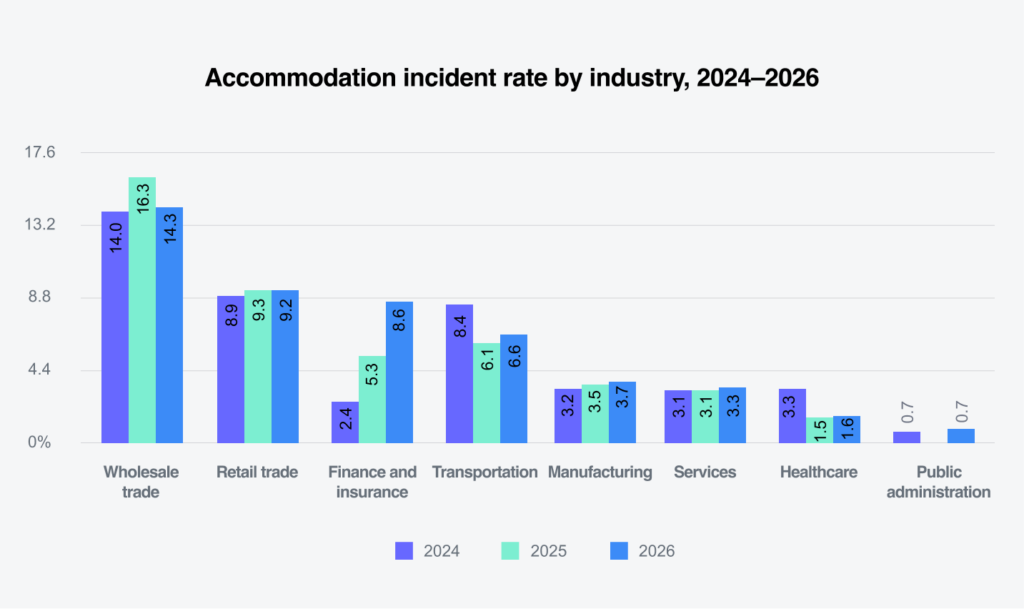
The first half of 2026 saw accommodations requests increase by more than 15%, with accommodation incidence also rising compared to the prior year. This growth continues a broader trend of employees seeking support that enables them to remain productive while managing medical, personal or workplace challenges.

The increase demonstrates that accommodations are no longer viewed as just a compliance obligation. They’re becoming a more important workforce management tool that helps organizations retain talent, support employee engagement and reduce unnecessary workforce disruption.

Leave remains the most requested accommodation

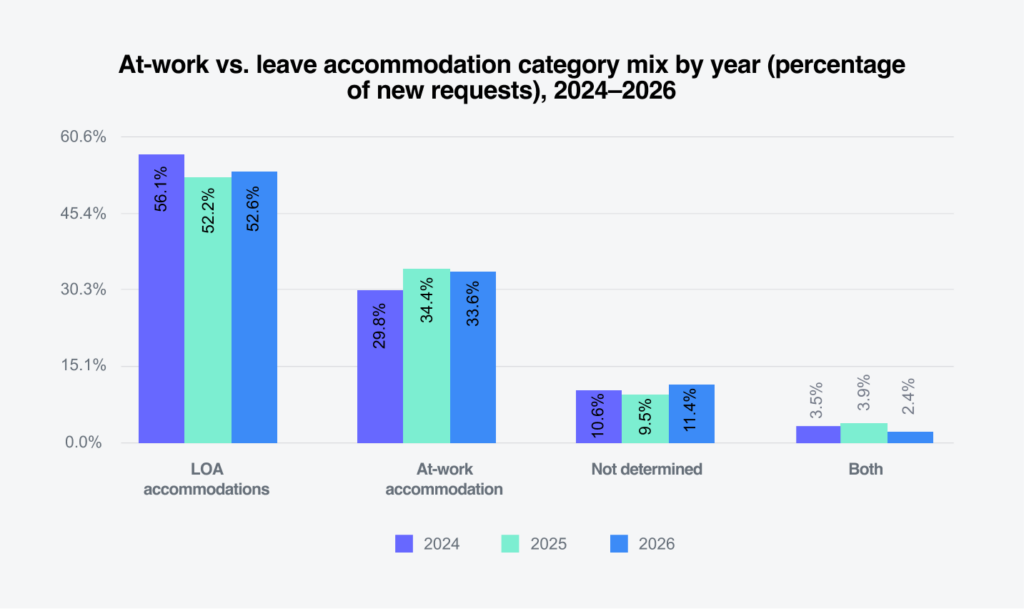
Leave-based accommodations continue to account for more than half of all accommodation requests. This trend has remained consistent over the past several years and reflects the growing intersection between accommodations programs, disability management and leave administration.

Employers continue to approve 95% of leave accommodation requests, demonstrating the important role these accommodations play in helping employees manage medical conditions while maintaining employment relationships. Studies from 2025, such as the Littler Annual Employer Survey report, suggest that accommodations requests for leave are increasing primarily due to mental health claims.

The continued growth of leave accommodations also reflects broader workforce trends, including increasing attention to mental health and the need for greater flexibility in balancing work and personal responsibilities.

Flexible work arrangements continue to drive requests

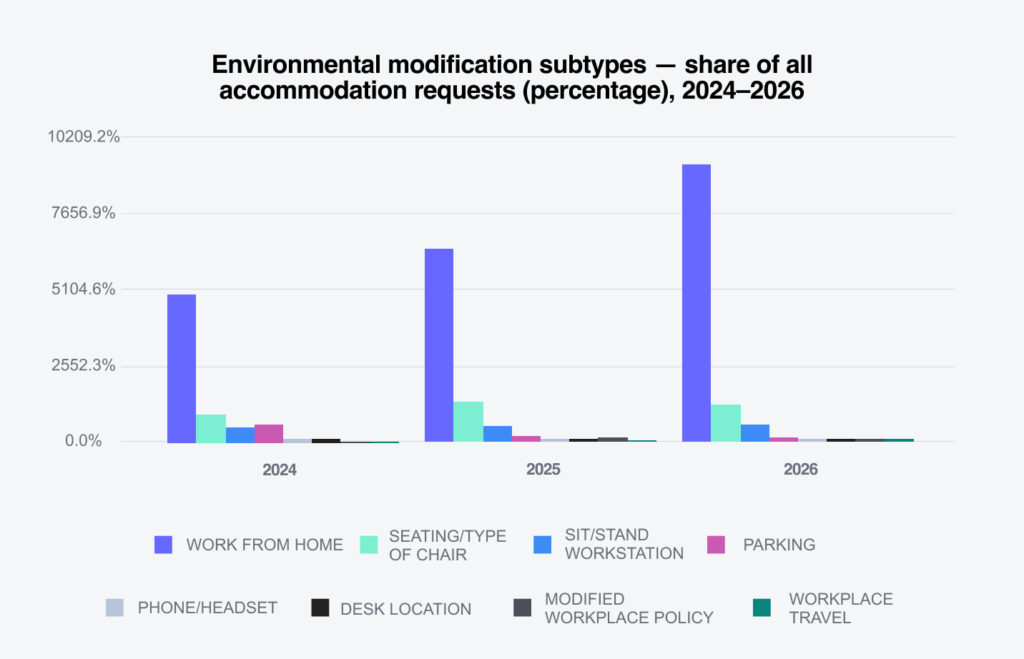
One of the most notable trends in 2026 is the continued increase in environmental accommodation requests, particularly those involving remote work arrangements. Work-from-home accommodations now account for nearly two-thirds of all environmental modification requests and continue to grow year over year.

This trend highlights the lasting impact of workplace changes introduced during and after the pandemic. Many employees still view workplace flexibility as an important component of their overall work experience, while employers continue to balance operational needs with evolving employee expectations.

As organizations refine their return-to-office strategies, requests related to workplace flexibility are likely to remain a significant area of focus.

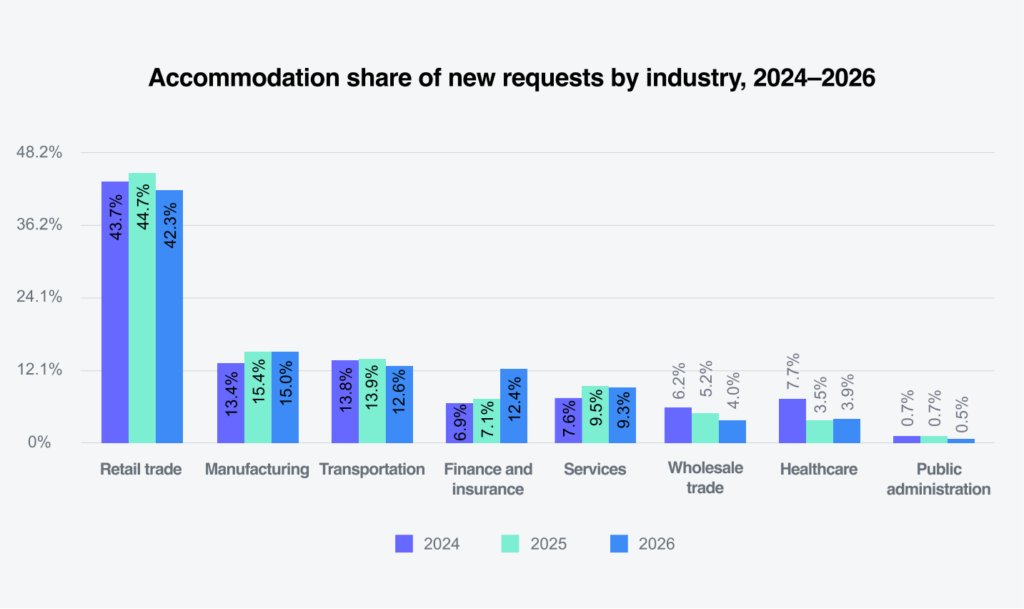
Retail leads accommodations activity

Unlike disability and leave programs — where the manufacturing, healthcare and transportation industries tend to generate the highest activity levels — accommodations requests are most prevalent within the retail and wholesale trade sectors. Retail continues to experience significantly higher accommodation activity than many other industries.

This distinction highlights the unique workforce and operational dynamics within customer-facing industries, where job design, scheduling flexibility, physical demands and workforce demographics can all influence accommodations needs.

Physical workplace accommodations remain important

While requests for workplace flexibility continue to grow, traditional physical accommodations remain an important component of accommodations programs.

Requests related to lifting restrictions, standing modifications and other ergonomic considerations still represent over 16% of at-work accommodations. These requests are particularly important in industries with physically demanding work environments and aging employee populations.

The ongoing presence of these requests reinforces the need for employers to maintain workplace accommodations programs that address both physical and non-physical employee needs.

Accommodations programs continue to evolve

Employers today are operating in an environment where accommodations requests involve a broad range of solutions, including leave, workplace flexibility, environmental modifications, job restructuring and physical accommodations.

At the same time, accommodations decisions continue to be influenced by evolving regulatory expectations, workforce demographics and employee well-being concerns. As a result, many organizations are moving toward more integrated approaches that align accommodations programs with disability management, leave administration, employee well-being initiatives and workforce retention strategies.

Looking ahead

Several trends are expected to influence accommodations programs over the coming years:

01

Continued growth in the volume of accommodations requests

02

Increasing demand for workplace flexibility and hybrid work solutions

03

Greater overlap between accommodations, disability and leave management programs

04

Ongoing focus on employee mental health and well-being

05

Increased attention to regulatory compliance and accommodations practices

06

Growing need for strategies that support employee retention and workforce participation

Conclusions

The accommodations landscape continues to evolve as employee expectations, workplace models and organizational priorities change.


Demand for accommodations is increasing, leave remains the most common accommodation solution and requests for workplace flexibility remain on the rise.

The broader message for employers is clear: Accommodations programs have become more than a compliance requirement. They’re increasingly a workforce strategy that supports retention, productivity, employee well-being and organizational resilience.

Employers that effectively balance employee needs with business operations will be best positioned to navigate the changing workplace environment in the years ahead.

2026 MID-YEAR

© 2026 Sedgwick