
2026 MID-YEAR

Disability and leave of absence

Report Objectives

This report aims to summarize the present metrics for our disability programs, assess the landscape of disability and leave claims administration, and benchmark our patterns against comparable industry research.

data parameters

Our practice team uses JURIS and TAMS claims data to perform comparative analyses informed by their expertise and analytics. The data in this report is based on the first half of the calendar year, January through June, for each reporting year.

Unpaid leave data are stand-alone cases only, meaning there is no concurrent disability claim. This is to avoid double-counting cases that are simply running in the background of the primary disability claim. Data on unpaid leave running concurrently with disability would mirror the disability report.

Certain client data is excluded from book-of-business metrics to avoid overrepresentation of a single client.

Executive summary

The disability and leave landscape continues to evolve as workforce demographics, mental health challenges and changing employee expectations reshape absence patterns across industries. While many traditional disability metrics remain stable, the data indicates a meaningful shift in the reasons employees are taking leave and the length of time they remain away from work.

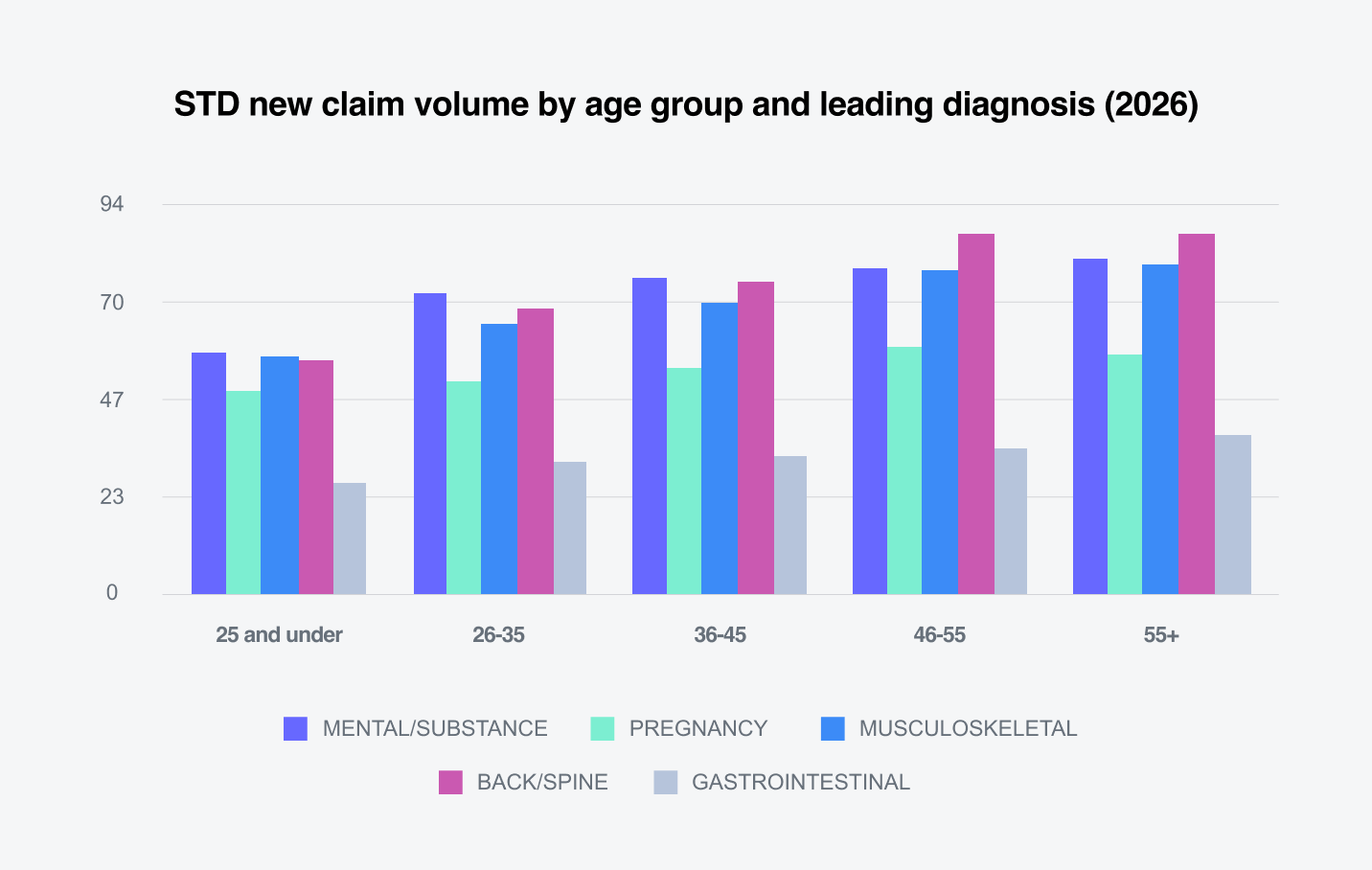
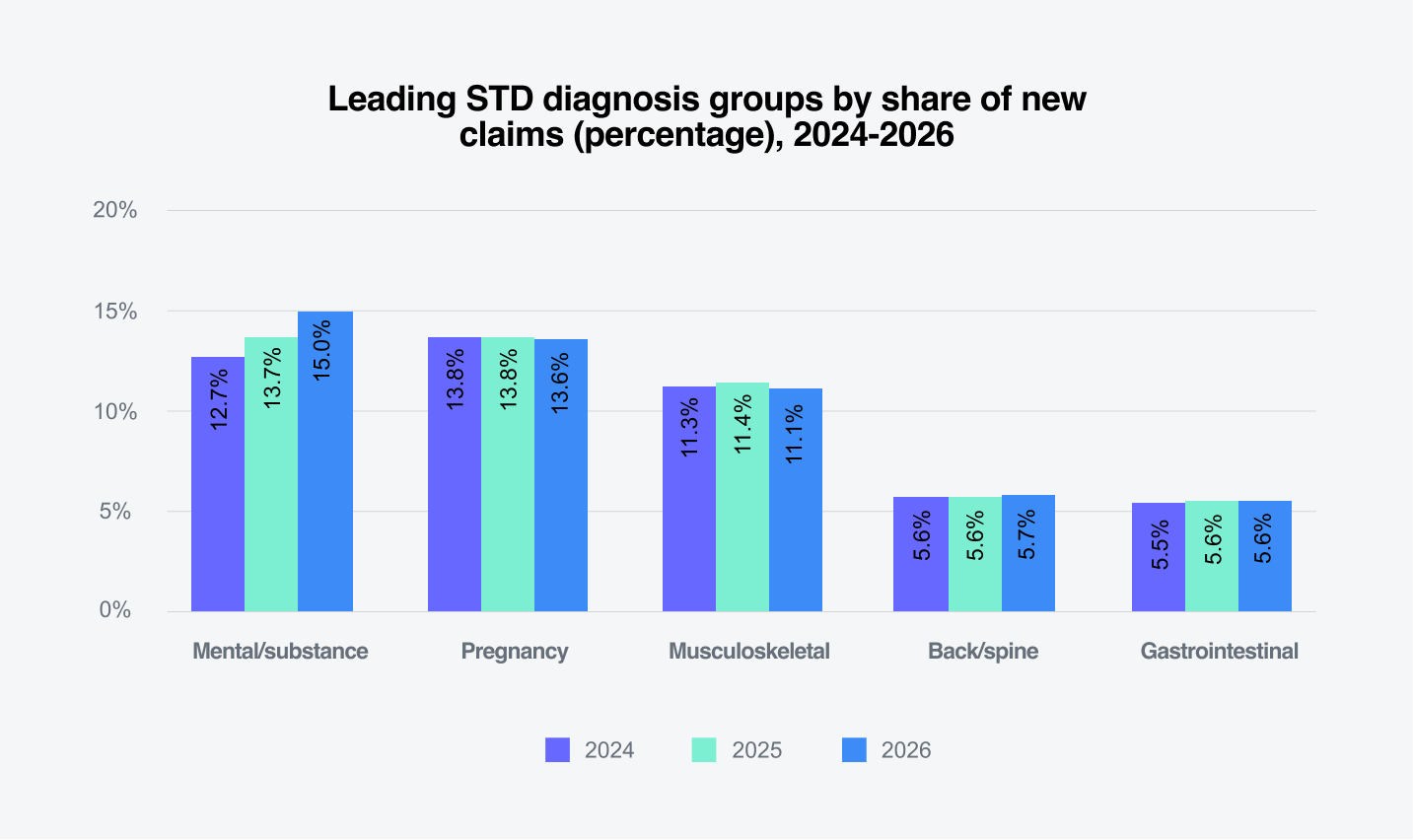
The most notable development in 2026 is the continued rise of mental health-related disability claims. For the first time, mental health conditions have surpassed all other diagnosis categories, including pregnancy-related claims, as the leading reason for new short-term disability (STD) absences. At the same time, mental health-related claims continue to generate some of the longest disability durations across nearly every age group.

Combined with an aging workforce, increasing comorbid conditions and growing utilization of employer-provided leave benefits, these trends are creating new challenges for employers seeking to balance employee well-being, productivity and benefit costs.

15%

of new STD claims were related to mental health and substance use in FY 2026.

Download a summary slide with these key observations.
Report contents

Mental health has become the defining workforce absence trend

The most significant change in the disability environment is the continued growth of mental health-related absences. Conditions related to mental health and substance use now represent the largest diagnostic category for new STD claims, increasing from 12.7% of claims in 2024 to 15.0% in 2026.

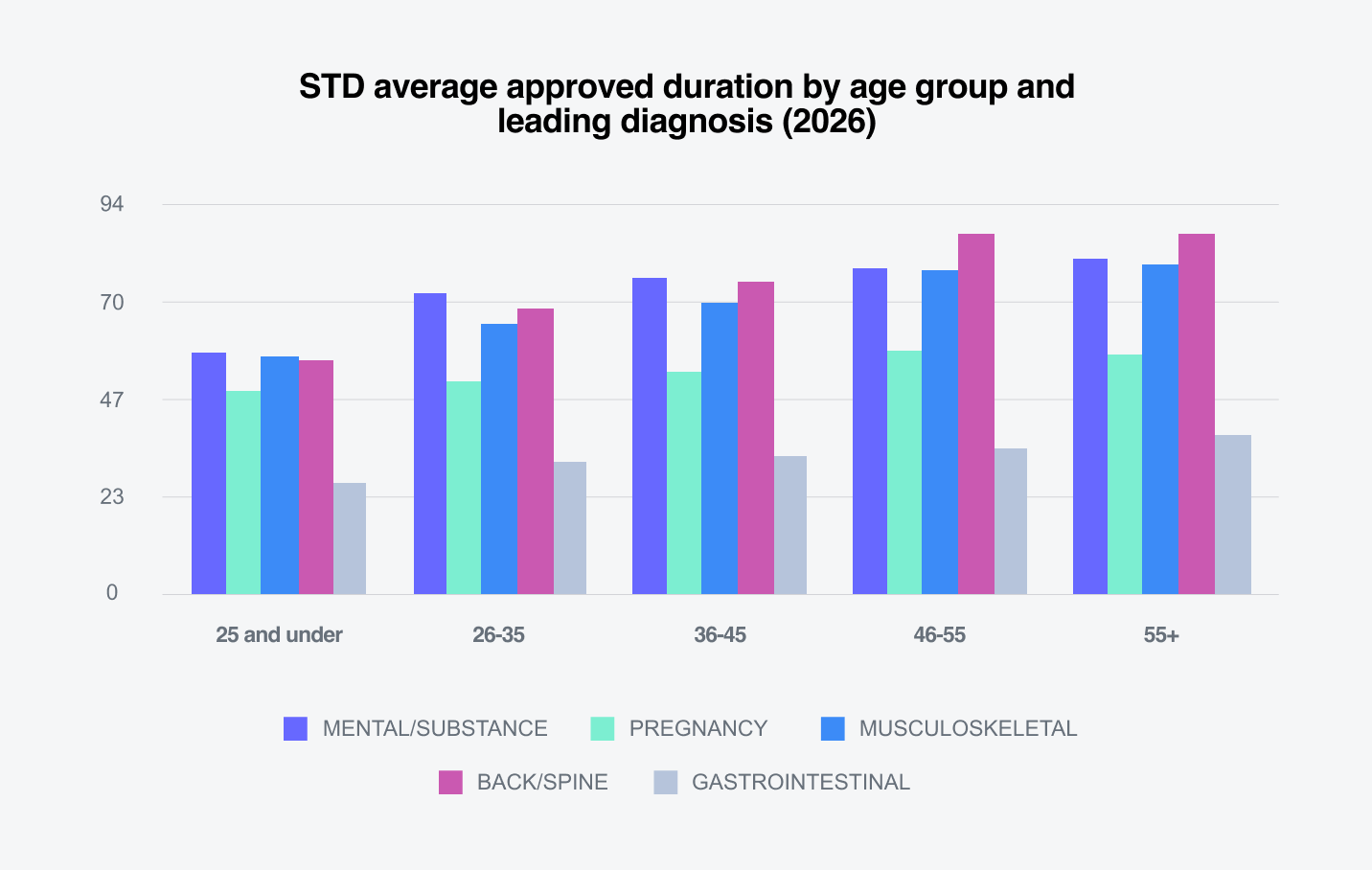
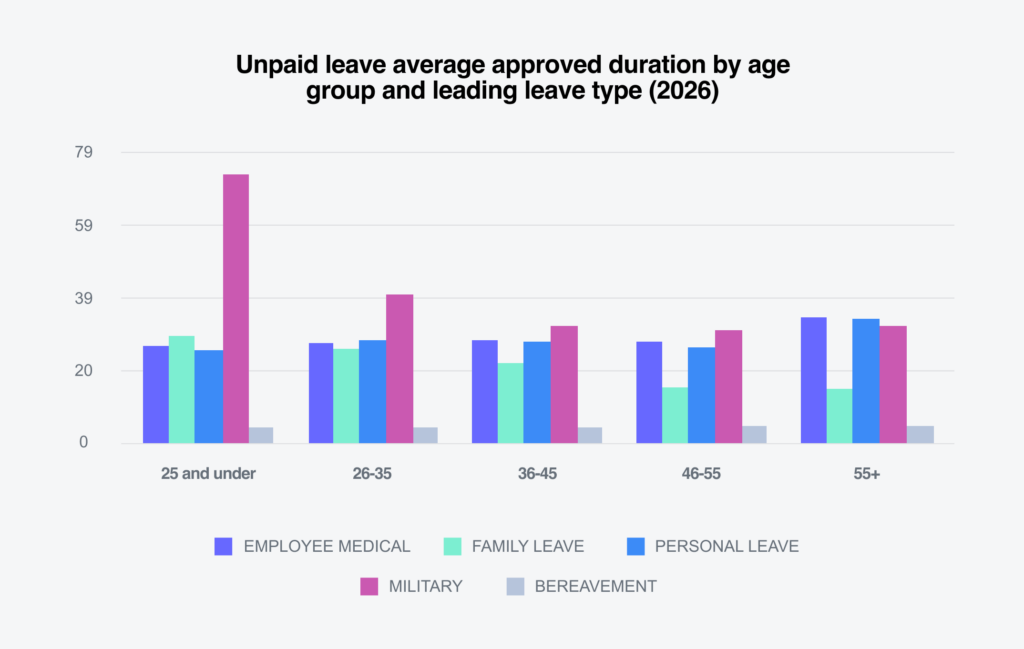
What makes this trend particularly important is not simply the increase in claim volume, but the impact on duration. Mental health claims consistently generate longer periods away from work than many other conditions, particularly among employees aged 35 and older.

This shift suggests that employers should continue expanding their focus on mental well-being, early intervention resources and integrated support programs designed to address both physical and behavioral health concerns.

Workforce demographics are shaping claim activity

Employees aged 26-45 continue to account for the majority of disability claims, representing more than half of all new STD activity. This remains the primary working-age population across many industries and continues to drive the overall absence experience.

At the same time, employees aged 55 and older represent nearly 22% of disability claims. As experienced employees remain in the workforce longer, employers are increasingly managing conditions associated with aging populations, including musculoskeletal disorders, back and spine conditions, and more complex health needs.

The data suggests that workforce age will continue to influence both disability incidence and claim duration in the years ahead.

Longer durations are increasing the impact of disability absences

While disability incidence remains relatively stable, claim duration continues to be influenced by more complex medical and behavioral health conditions. Mental health diagnoses, musculoskeletal disorders and comorbid conditions are all contributing to longer disability periods.

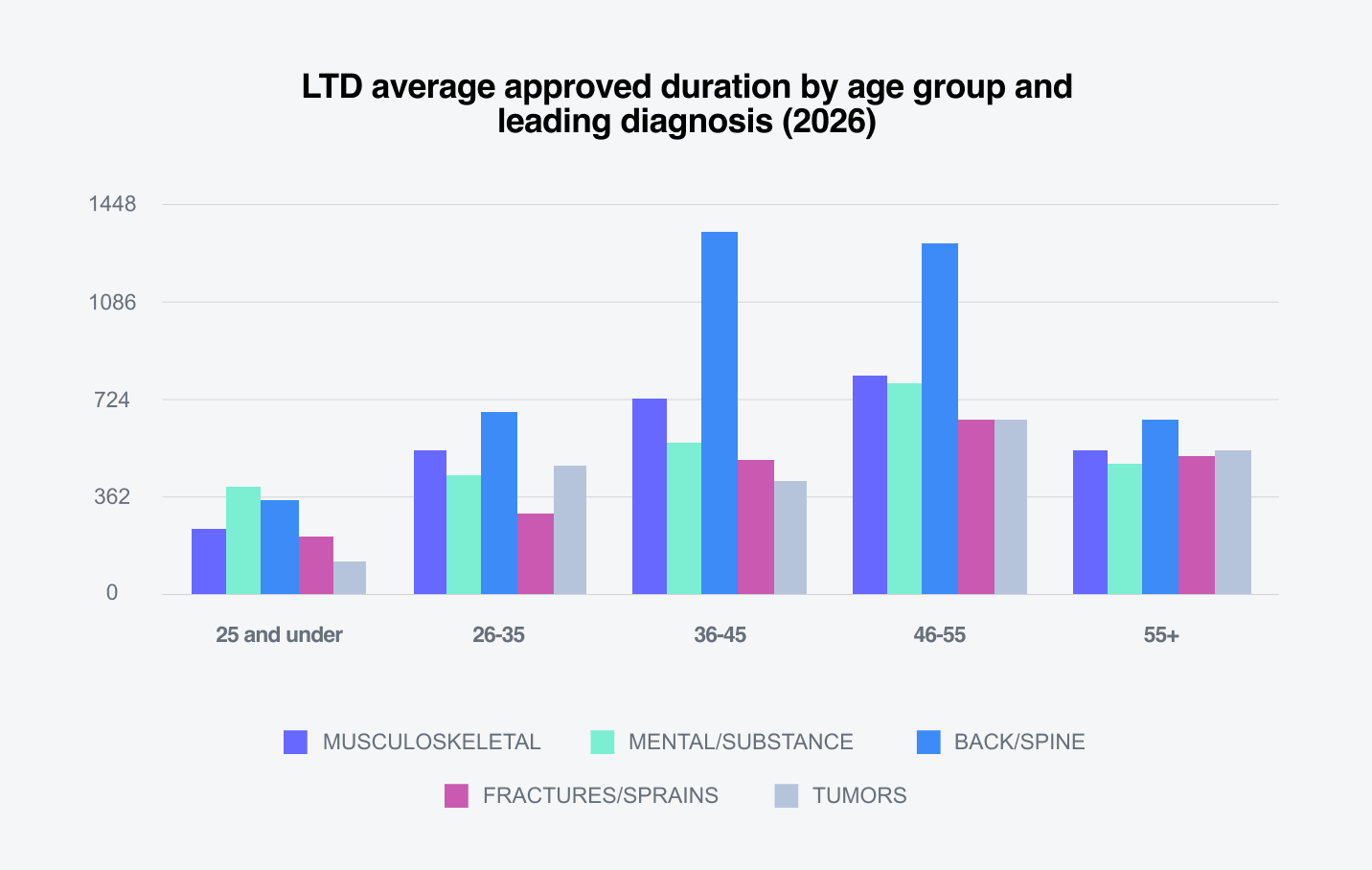
The impact is even more apparent in long-term disability (LTD). Nearly 44% of LTD claims now involve multiple contributing conditions, and these claims remain open substantially longer than claims involving a single diagnosis. Average durations for comorbid claims exceed 867 days, compared to approximately 592 days for single-condition claims.

This presents a challenge for employers: Many of the issues they face with mental health claims in the STD environment will only increase. Insured programs often have a 24-month limit on mental health durations and/or the occupational designation will change from an employee’s own occupation to any occupation. Unlike with STD, where employers may be able to offer pre-claim intervention programs, they must now identify solutions that will allow for treatment of the comorbid condition as well as the primary diagnosis in order to avoid an employee’s potential relapse.

Disability outcomes continue to improve

Despite growing complexity in claim diagnoses, overall disability outcomes remain positive.

Denial rates have continued to decline, resolution rates have improved and return to work remains the most common claim outcome. More than 58% of closed STD claims now conclude with a successful return to work.

These results suggest that employers and claim administrators are making progress in supporting employees through periods of disability while facilitating successful workforce reintegration.

Manufacturing and transportation continue to experience higher absence activity

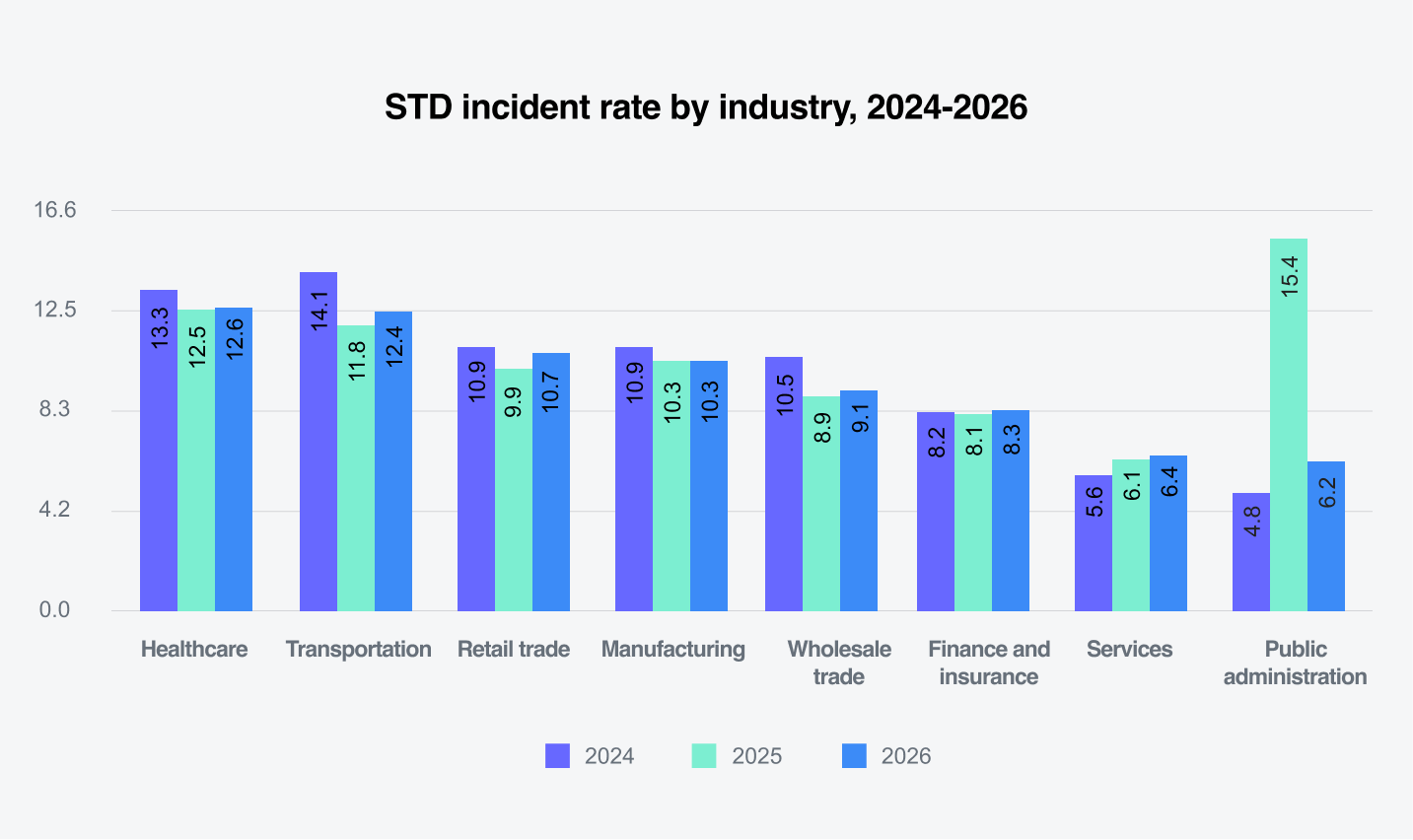
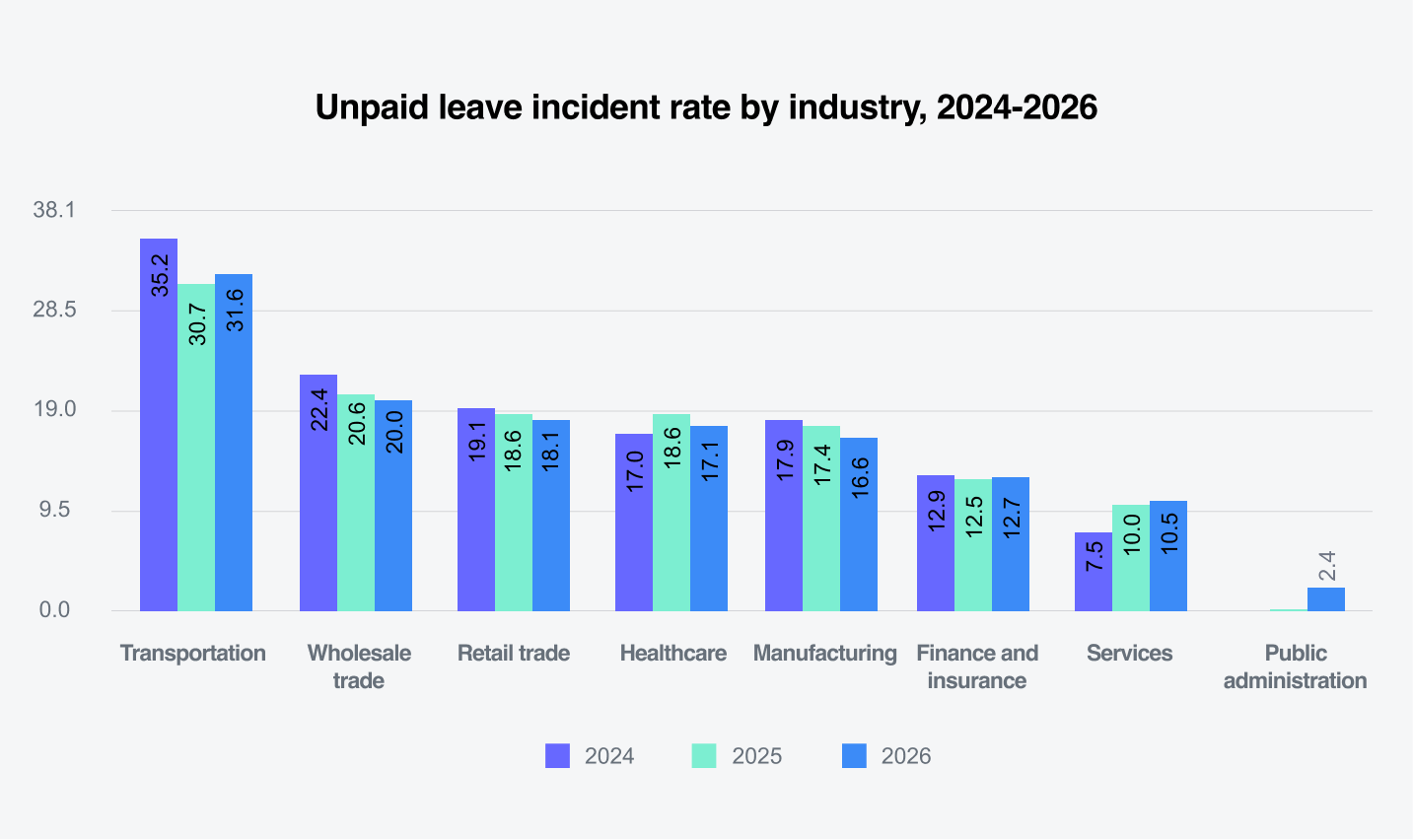
Industry results show that manufacturing and transportation continue to generate higher levels of disability and leave activity than many other sectors. These industries face unique workforce pressures due to physically demanding work environments, aging employee populations and broader economic uncertainty.

Many of the trends observed within disability programs — including increasing mental health prevalence and longer-duration physical conditions — are particularly evident within these sectors.

For employers operating in these industries, effective absence management remains an important component of overall workforce strategy.

Leave programs are evolving

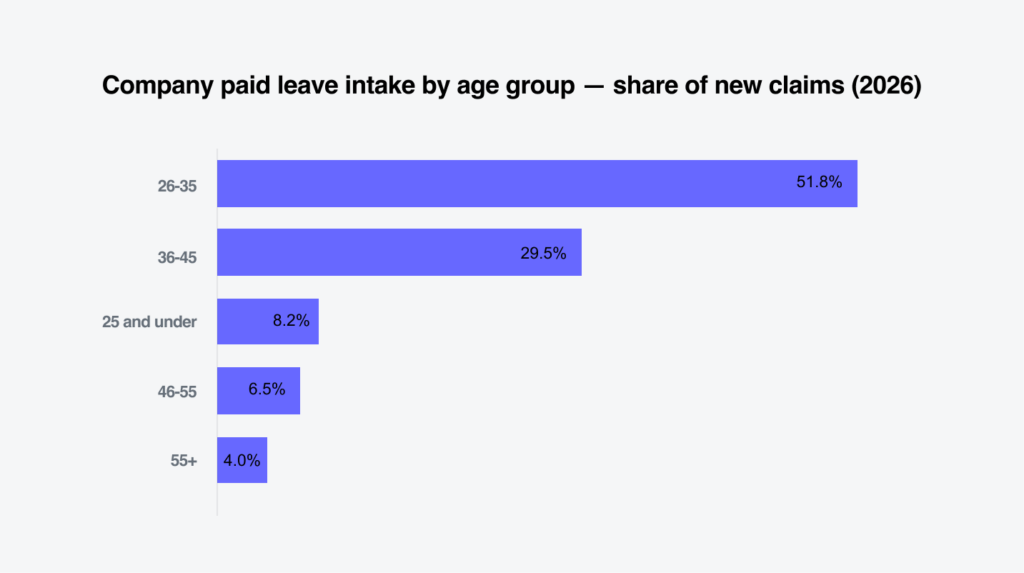
The use of employer-sponsored paid leave programs remains strong, particularly among employees in the 26-35 age demographic. Paid parental and family leave programs continue to be among the most utilized company-sponsored leave benefits and remain an important component of workforce attraction and retention strategies.

As workforce expectations evolve, leave programs are increasingly viewed as part of an organization’s broader employee experience and well-being strategy, rather than simply a compliance or administrative function.

Looking ahead

Several trends are expected to influence disability and leave programs moving forward:

01

Continued growth in mental health-related disability claims

02

Increasing claim complexity driven by comorbid conditions

03

Longer disability durations associated with behavioral health and chronic conditions

04

Greater utilization of paid family and caregiver leave benefits

05

Ongoing workforce demographic shifts as older employees remain active longer

06

Rising focus on employee well-being, return-to-work outcomes and integrated absence management

Conclusions

The 2026 disability and leave environment reflects a workforce whose needs are changing.


Mental health is becoming a larger driver of absences, claim complexity is increasing and employees are utilizing leave benefits in new ways. At the same time, employers continue to achieve strong return-to-work outcomes and are adapting benefit strategies to address evolving workforce expectations.

Organizations that successfully integrate disability, leave, well-being and return-to-work strategies will be best positioned to manage costs, support employees and maintain workforce productivity in the years ahead.

© 2026 Sedgwick