
2026 MID-YEAR
Statutory and paid leave

Report Objectives
This report aims to summarize the present metrics for statutory claims, assess the landscape surrounding statutory claims administration and benchmark our patterns against comparable industry research.
data parameters
Our practice team uses JURIS and TAMS claims data to perform comparative analyses informed by their expertise and analytics. The data in this report is based on the first half of the year, January through June, for each reporting year.
Detailed analysis is included for California, Colorado, Connecticut, Massachusetts, New Jersey, New York, Oregon and Washington. Certain client data is excluded from book of business metrics to avoid overrepresentation of a single client.
Executive summary
Statutory disability and paid leave programs continue to expand in both volume and complexity across the United States. In 2026, claim volume has increased nearly 20%, making statutory leave one of the fastest-growing workforce benefit programs. Growth was accompanied by increases in claim duration and approved leave days, reflecting the continued evolution of state-sponsored leave benefits and increasing employee utilization.
While claim growth remains concentrated in a relatively small number of states, the broader trend is clear: Statutory leave programs are becoming a more significant component of workforce absence management. As additional states implement paid family and medical leave (PFML) programs and existing programs expand eligibility and benefits, employers face a rapidly changing compliance and workforce management environment.
19.1%
increase in claim volume in FY 2026.
findings in this report highlight three key developments
01
Continued growth in statutory leave utilization
02
Increasing concentration of claims in large states like New York and California
03
The ongoing expansion of state leave programs will increase employer complexity in the years ahead

Download a summary slide with these key observations.
Statutory leave continues to experience rapid growth
Annualized claim volume increased 19.1% year over year, while both open and closed claims grew at double-digit rates. The average approved duration also increased, reaching nearly 60 days.
These trends demonstrate that statutory leave programs are no longer emerging benefits; they’ve become an established part of the workforce landscape, and employees are utilizing them with increasing frequency. Growth in both volume and duration suggests that employers should expect statutory leave programs to continue influencing workforce availability, staffing requirements and absence management strategies.
New York and California are driving program activity
Two states continue to account for the majority of statutory leave volume.
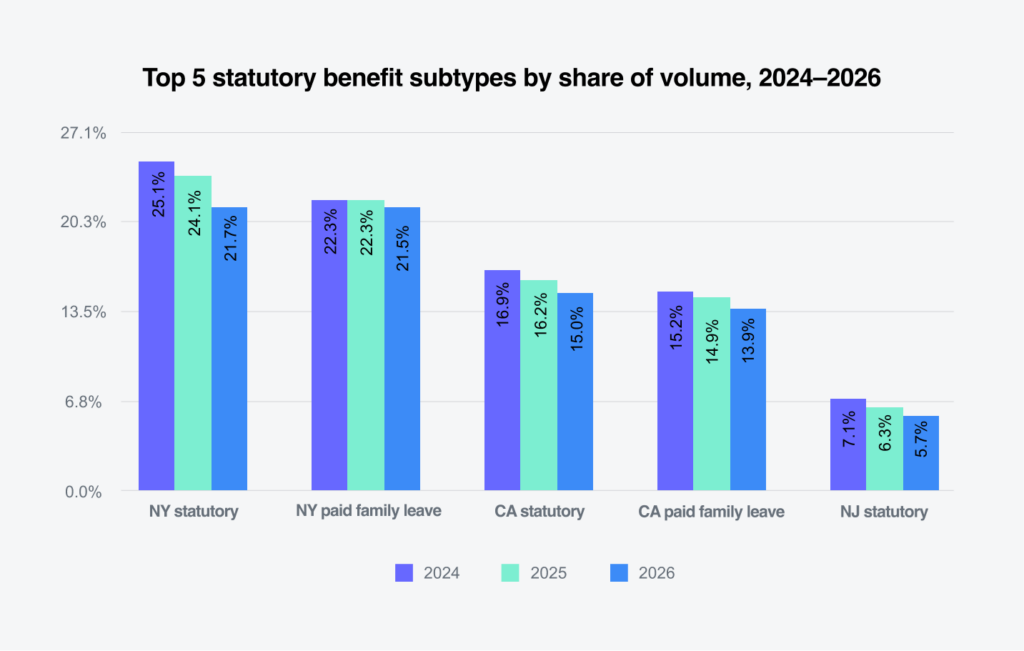
New York and California represent approximately two-thirds of all claims within the report population, while New York statutory disability (SD), New York paid family leave (PFL), California SD and California PFL remain the largest individual programs by volume.
Although these programs dominate overall activity, their share of total volume has declined modestly as additional state programs mature and employee utilization increases across newer jurisdictions. This gradual shift signals a broader national trend toward increased adoption of state-sponsored leave programs and a more diverse statutory leave environment for multistate employers.
Manufacturing and transportation show the highest utilization
The manufacturing and transportation sectors continue to generate the largest share of statutory leave claims, experiencing year-over-year growth. These industries also mirror utilization patterns seen more broadly across disability and absence management programs.
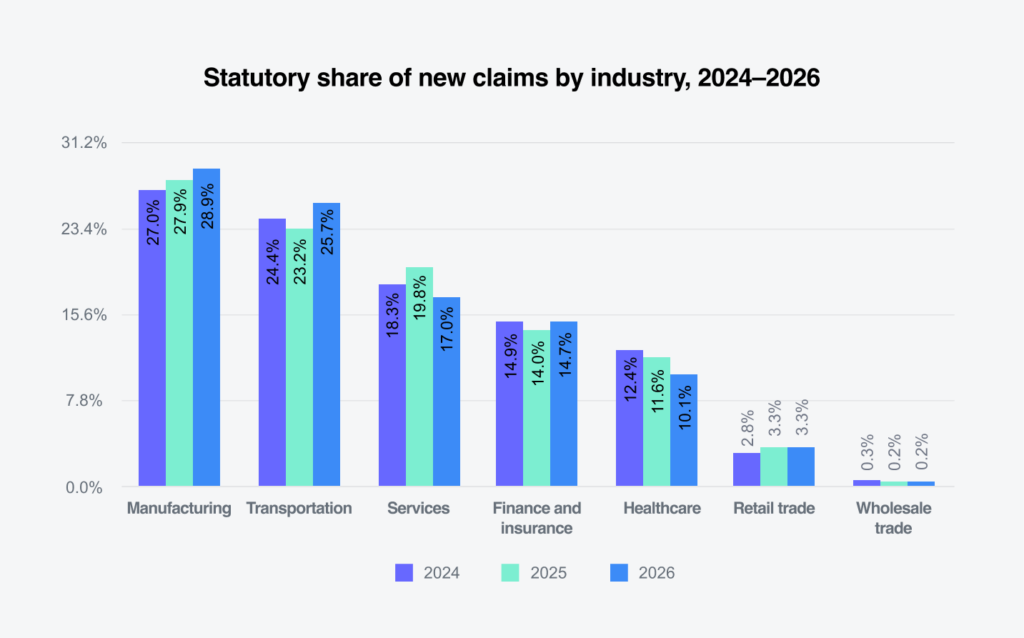
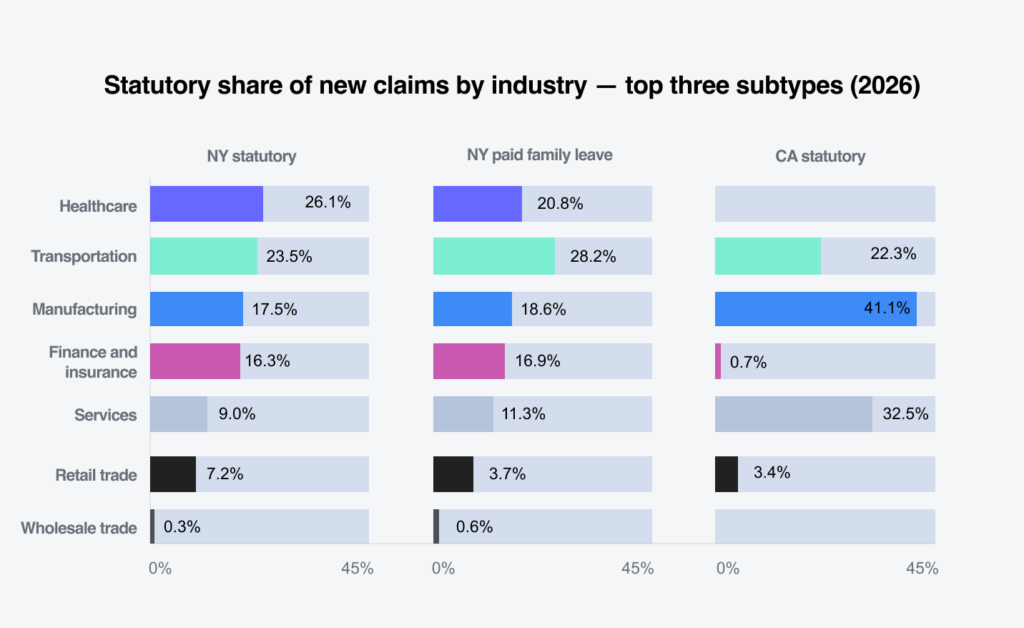
For employers in labor-intensive industries, statutory leave programs are becoming an increasingly important workforce consideration. As states expand both wage replacement benefits and job protections, leave utilization patterns are expected to evolve — particularly in sectors that rely heavily on skilled operational employees.
Core workforce groups remain the primary users
Employees between the ages of 26 and 45 continue to account for the majority of statutory leave claims, representing nearly two-thirds of overall volume. This reflects the life events that commonly trigger usage of medical and family leave benefits, including personal health needs, parental leave and family caregiving responsibilities.
At the same time, employees aged 55 and older account for more than 15% of claims. As workforce demographics continue to shift and employees remain in the workforce longer, employers may experience increased utilization among older populations, who historically have longer durations of absence and higher associated costs.

Longer-tenured employees are using benefits more frequently
Employees with five-to-nine years of service now represent the largest segment of statutory leave users. However, employees with more than 20 years of service continue to account for a significant share of claims.

This trend is notable because longer-tenured employees often occupy critical operational and leadership positions within organizations. Extended absences among experienced employees can create productivity challenges, increase training demands and place additional pressure on remaining staff members.
State programs are getting more generous
Generally, recent paid leave programs have been designed to provide greater income replacement than earlier ones. Many states now replace between 80% and 100% of wages for lower-income workers and offer weekly benefits exceeding $1,000.
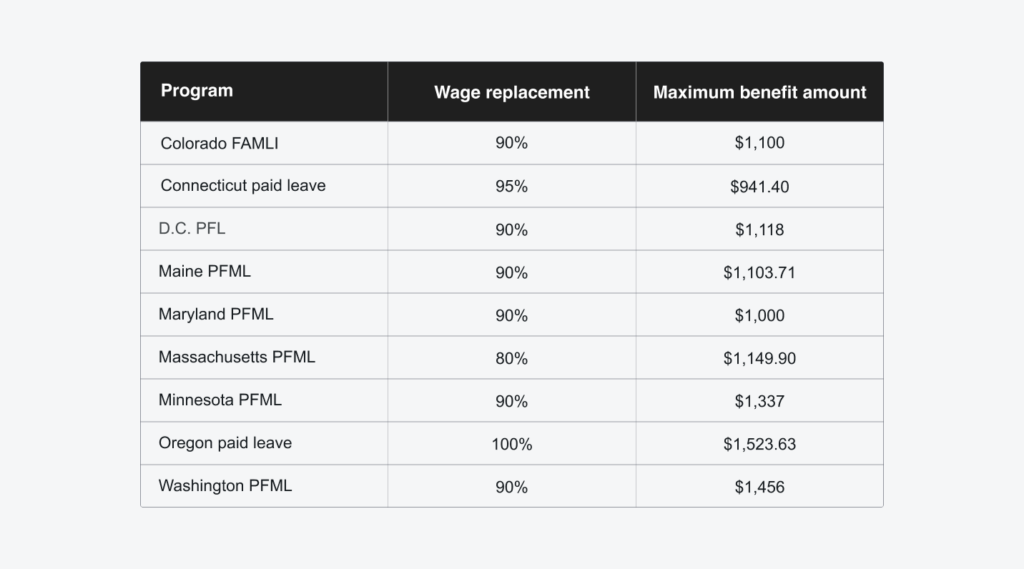
In addition, many jurisdictions have expanded their eligibility standards and broadened their definition of family members (for example: grandparents, grandchildren, siblings, parents-in-law and domestic partners) who may qualify an employee for leave. These changes have increased program accessibility and are likely to support greater utilization.
The result is a statutory leave environment that’s becoming more employee-friendly, while creating additional administrative and financial considerations for employers.
The broadening regulatory landscape
New statutory programs took effect during 2026 in Delaware, Minnesota and Maine, and Maryland continues preparing for the launch of its family and medical leave insurance (FAMLI) program. Washington also lowered its eligibility requirements, making benefits available to additional workers.
States continue to view paid family and medical leave as a policy priority, and legislative activity remains strong. As a result, employers can expect the number of statutory leave programs to increase, rather than stabilize, in the coming years.
Beyond state activity, local jurisdictions are beginning to explore independent leave mandates. Pennsylvania’s Allegheny County appears to be the first municipality to propose an independent, statutory paid parental leave benefit. The Allegheny benefit, if adopted, would require employers in the county to provide up to 20 weeks of paid parental leave. If these efforts gain traction, employers could face additional layers of compliance that further increase program complexity and administrative responsibilities.
Looking ahead
The trends expected to shape the statutory leave environment over the next several years include:
01
Continued expansion of PFML programs across additional states
02
Growth in employee utilization as awareness of available benefits increases
03
Increased wage replacement levels and broader eligibility standards
04
Greater compliance complexity for employers operating in multiple states
05
Increased focus on integrating statutory leave with disability, absence and return-to-work programs
Conclusions
Statutory disability and paid leave programs are evolving from niche benefits into a significant component of the employee benefits landscape.
Strong growth in claim volume, expanding state programs, broader eligibility requirements and more generous benefit structures are reshaping how employers manage workforce absences.
For employers, the challenge is no longer simply understanding individual state requirements. It’s developing workforce strategies that can adapt to an increasingly complex and rapidly expanding statutory leave environment.
Organizations that proactively align their compliance, absence management and return-to-work strategies will be better positioned to navigate the next phase of statutory leave expansion.
2026 MID-YEAR